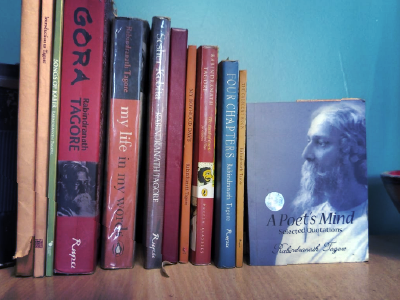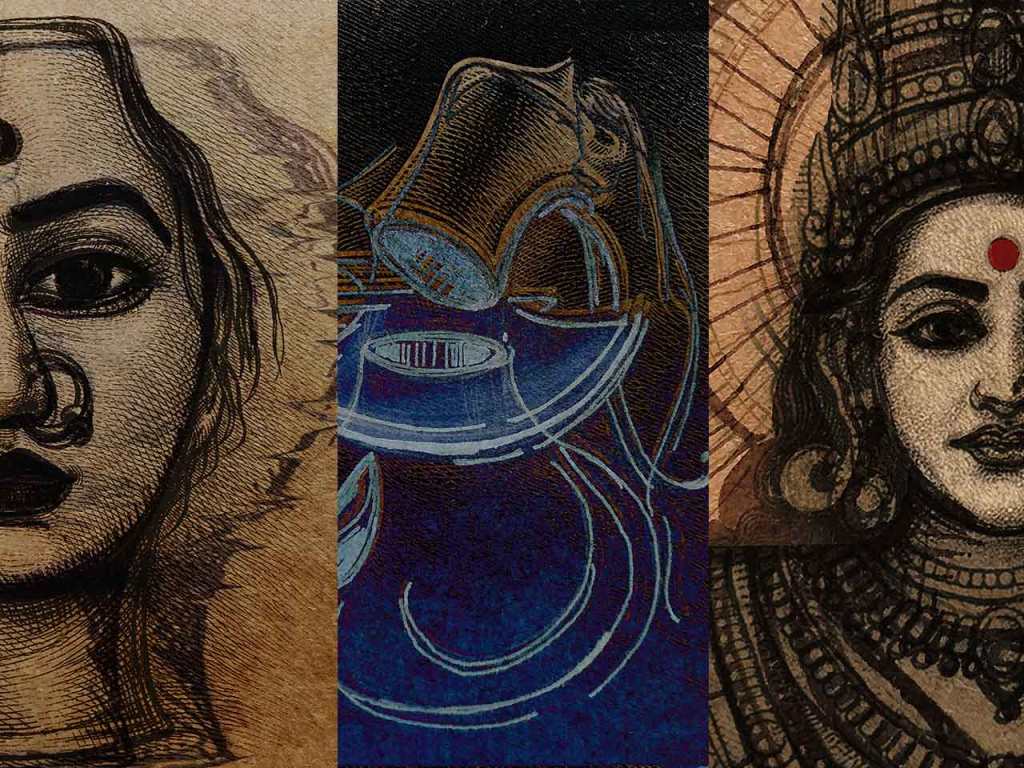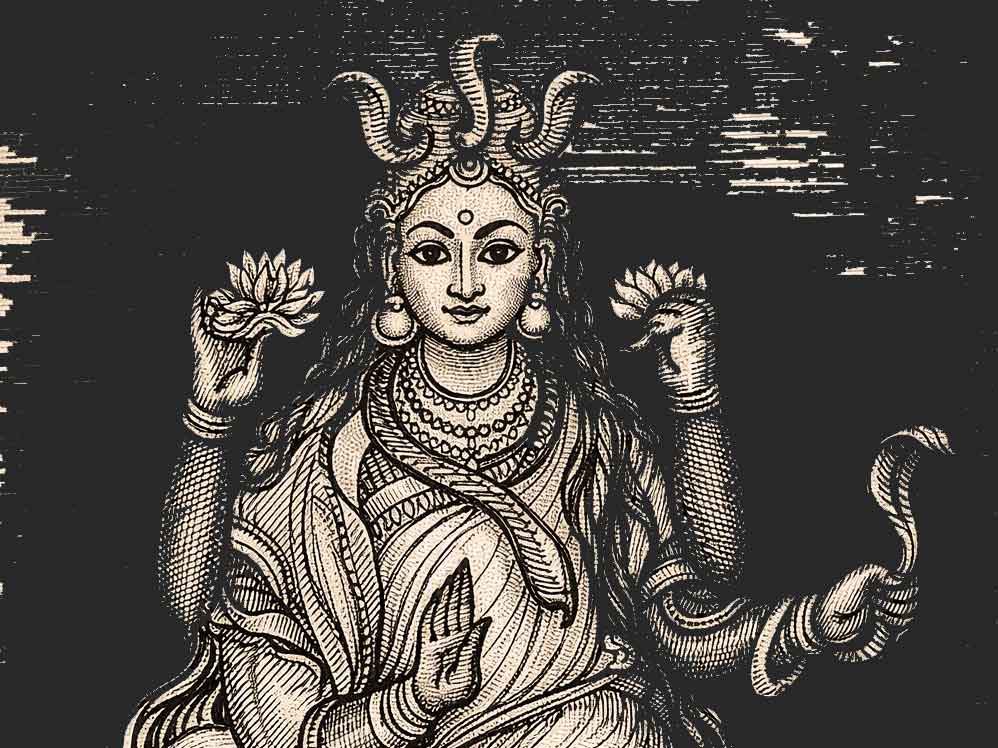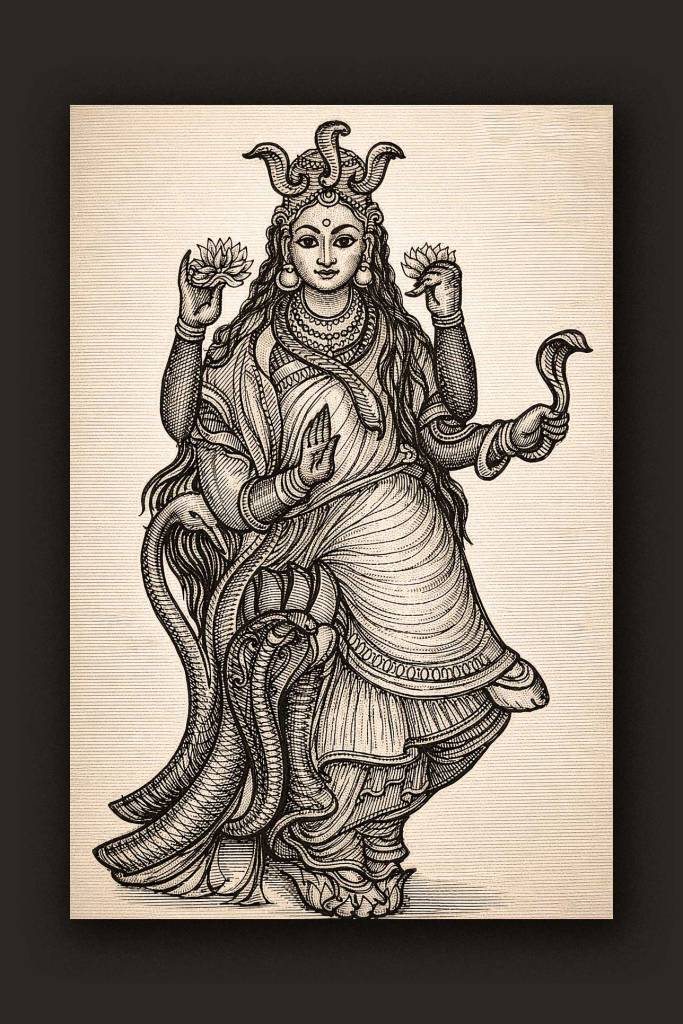
A sketch of the Hindu folk-goddess of snakes – Manasa Devi – drawn by photogrphic reference.
Manasa / मनसा / Manasā
Predominantly worshiped in east and northeastern parts of India, she is also known as the Serpent-Goddess, or Goddess of Snakes. According to some accounts, she is the daughter of Shiva, from a mortal woman. It is believed that she is the sister of Vasuki (the king of snakes). She is not particularly liked by her stepmother Chandi/Parvati, and so does not duly get the affections of Shiva. Her name, Manasa, is said to mean “born of the mind.” Some other accounts state that she is born out of the mind of sage Kashyap. Hence, she is also considered his daughter, along with Kadru (the matriarchal source of the Nagas).
She is depicted with many snakes and serpentine forms. She also holds lotuses, sits upon a lotus, and has a lotus pedestal for her feet. Thus, in Bengal, she is also known as Padmavati. It is at times considered that she was born out of Shiva’s seed that impregnated the serpents under the earth, and a lotus or Padma was born out of it. Manasa thus had a divine birth and miraculous powers too.
She was known as Vishahari (not vishaari, poisonous, but quite its opposite – vishahari – the destroyer of poisons). She was known to protect people who worshiped her from reptiles. Particularly in the monsoons (Shravan/July–August), when snakes are rampant everywhere, people make offerings to her to ward off snakes. Being a killer of poisons, she is known to cure snakebites too.
Sage Astika, the son of Manasa and Jaratkaru, was the one who saved the entire snake-race during Janamejaya’s snake-sacrifice – an episode mentioned in the Mahabharata. He impressed King Janamejaya with his wisdom and he was granted a wish, in the fulfilment of which, he aske the king to stop the killing of snakes.
Particularly on the day of Nag Panchmi, that occurs on the fifth-day of the month of Shravan , devotees make offerings to the snake that include a branch of a tree, a pan of water, sometimes milk, a clay pot, and an earthen image of the snake (representative of the goddess). Apart from snake-bite cure, Manasa is also worshiped for her protective powers and for family prosperity and fertility. Manasamangal Kavya, an epic that speaks about Manasa’s divinity, is sung by certain communities.
Her tale goes as such:
At that time, a very large proportion of the population were devotees of Shiva. Manasa was not too happy with this fact and wanted to convert all to make them her own devotees.
There was a wealthy merchant, Chand Sadagar, who lived in a place named Champaknagar. He, like many others in the area, was an ardent Shiv-bhakt. Manasa, on her mission, had him as her target. She began trying all possible ways to shake his allegiance from Shiva to her own side.
He had developed a beautiful, lush garden outside his haveli. Manasa, the serpent-goddess, left some of her snakes in the landscape he had grown with all his effort. Soon, the garden lost its luster and became barren. Through his devotion, Shiva’s powers brought his garden back to life.
Next, Manasa took the form of a beautiful woman and began to woo Chand Sadagar with her beauty. The merchant was so attracted to her that he promised to make her his wife. Madly in love, he also agreed to give her all the magical powers that Shiva had bestowed upon him as his devotee before their marriage.
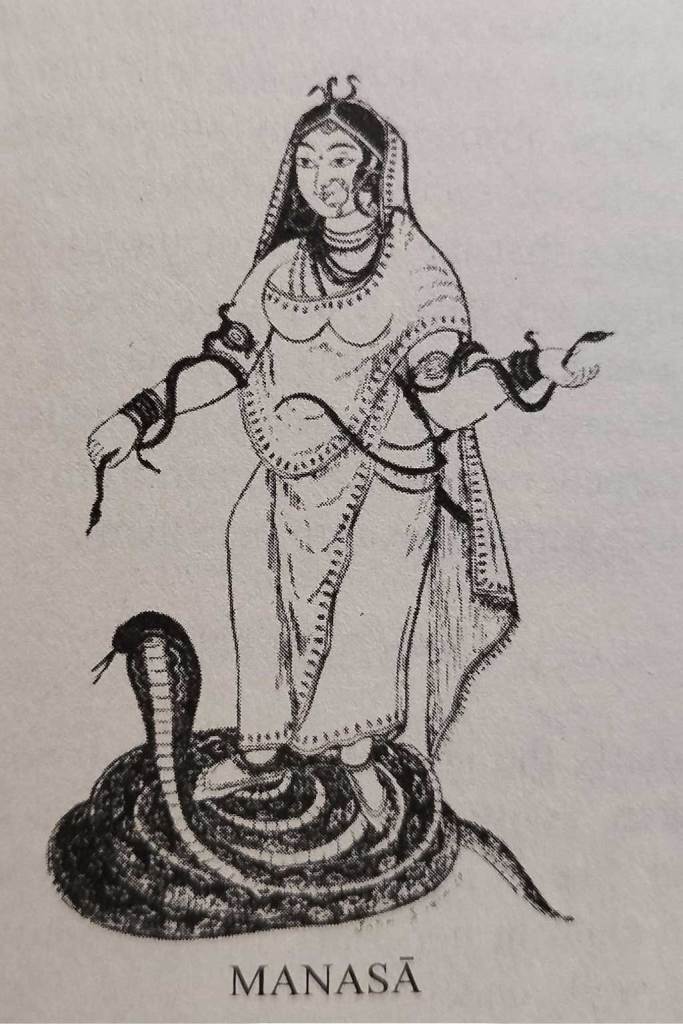
Manasa (from a Native Picture) from Hindu Mythology: Vedic and Puranic by W. J. Wilkins
Manasa then showed him her true self and demanded that he worship her. Chand Sadagar denied this, and Manasa once again destroyed his garden. This time, he could not even magically bring it back to life. Manasa did not stop there. Her snakes entered his haveli and bit each of his six boys, and they all died. Chand was still certain that he would not bow down to her in devotion.
On a voyage, Manasa also sent strong winds to sink his ship. Not even in the face of death by drowning did Chand Sadagar agree to worship Manasa. Giving him another chance, Manasa returned him safely to the shore where all people were devotees of Manasa. Chand Sadagar ran out of that place in urgency to return home. En route, he encountered rats coming out of his food, his employees being converted and causing him great losses, and many more such adversities.
He was finally back in Champaknagar, and another son was born to Chand Sadagar. He was named Lakshmindra. When he reached marriageable age, he married a beautiful woman named Bhelua. But just before their marriage, Chand Sadagar was told by astrologers that this son of his too would die from snakebite.
He decided to get a metal house built so that it was impossible for snakes to enter through it. But Manasa made sure that the builders left a small slit through which she could enter the bedchamber of the newly wedded couple. Bhelua, who was on guard throughout the night, saw a small snake enter. She offered it milk, and while the snake drank, she tied a noose around it. When two other snakes came in the same manner, tired of the ordeal, Bhelua dozed off, and Manasa’s snake slithered in through the sheets and bit Lakshmindra.
Bhelua decided to accompany her dead husband across the river on a raft, in hope of the poisoned snakebite being cured. They floated to many villages and riverbanks. One day, she saw a mother washing clothes at the river, and her naughty little boy constantly disturbing her with his mischief. The mother strangled the boy and he died. After she had washed all her clothes and the job was done, the mother sprinkled some water on the boy, and the boy sprang back to life.
Looking at this miracle, Bhelua went to the lady and asked her if she could do the same to her husband Lakshmindra. This miracle-worker was none other than Manasa herself. The lady promised to bring Lakshmindra alive only if Bhelua could convince his father to begin worshiping Manasa.
Bhelua took this prospect home to the grief-stricken Chand Sadagar and his wife. She strongly stated that they would come in only if Chand Sadagar converted. The loss of his son had taken him over so much that the hope of seeing his son alive outweighed all the turmoil he had gone through at Manasa’s behest. He promised Bhelua that he would worship the goddess.
However reluctant, Chand Sadagar offered a flower to the image of Manasa—though with his left hand, as the right hand, he said, was reserved for Shiva. Pleased with just this much, Manasa breathed life into Lakshmindra.
Ever since then, her worship continues…
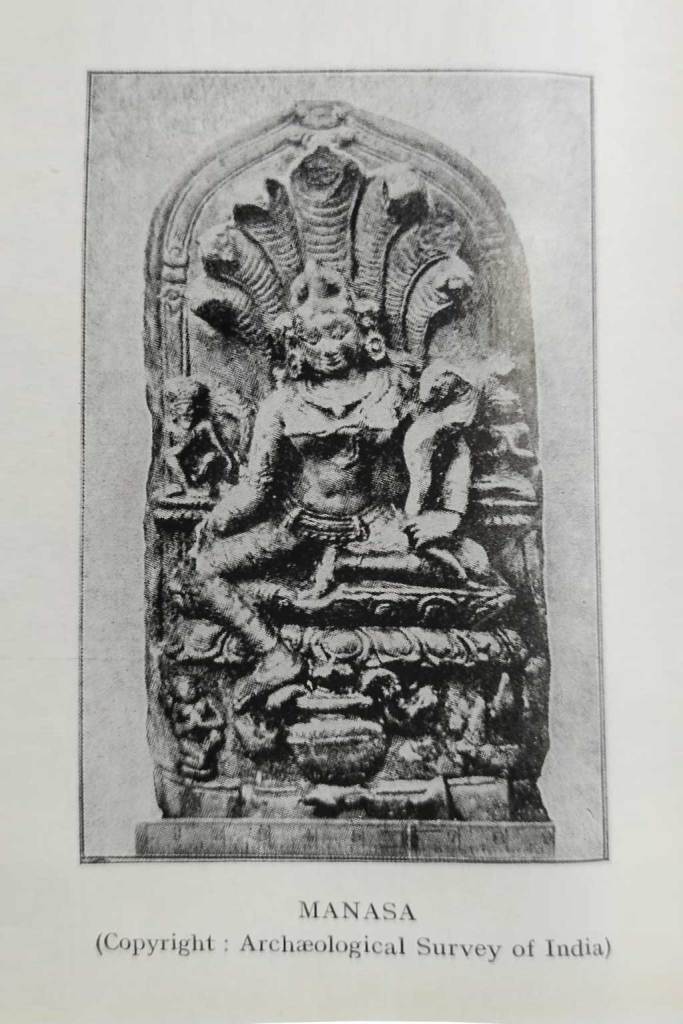
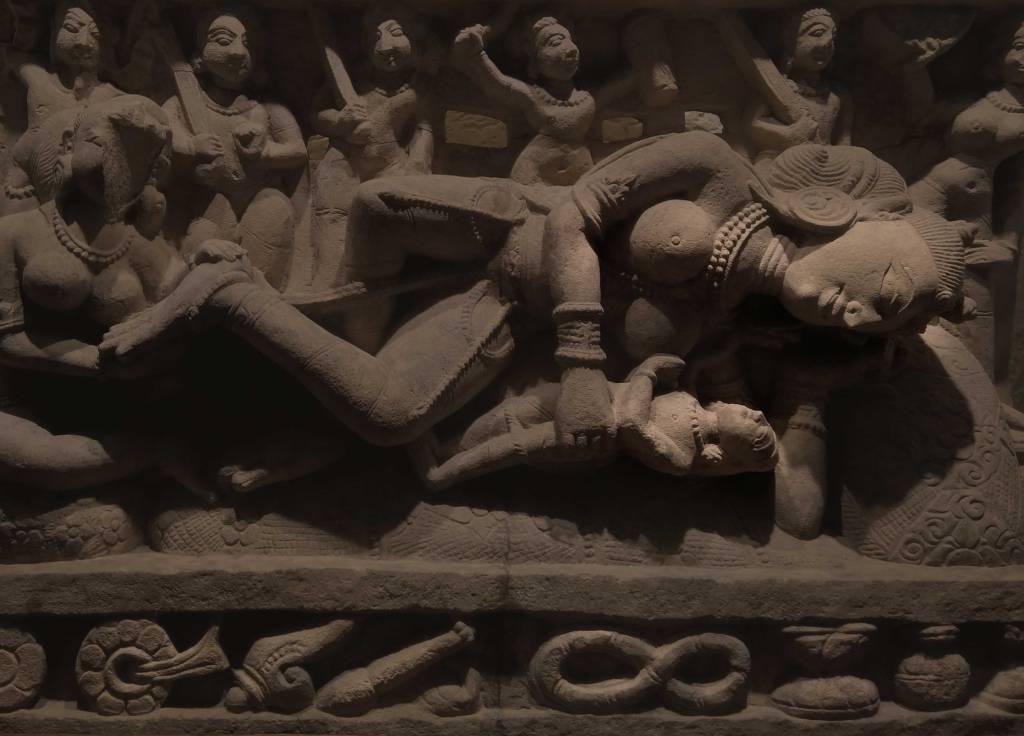
Manasa (sculptural image) from Epics, Myths and Legends of India by P. Thomas