7 May 1861
The day Rabindranath Tagore was born in Jorasanko Thakur Bari, Bengal Presidency, India.
I write this blog to mark his 165th birth anniversary.
Through this bolg I explore Rabindranath Tagore’s philosophy of aesthetics and the ideas seen in Sufi mystical art. I find a lot of semblance between Tagore’s reflections on art, beauty, expression, and creativity, and the essence of Sufi mystical art. Both, echo common elements with their thoughts on and in their expression through music, poetry, and dance. There are striking parallels that emerge in their conceptualization of aesthetics. Both traditions draw deeply on natural elements and symbolic imagery, weaving a vision of art that is at once spiritual and expressive.
This is a study of how Tagore and the Sufi mystics converge in their understanding of art as a pathway to truth, beauty, and transcendence.
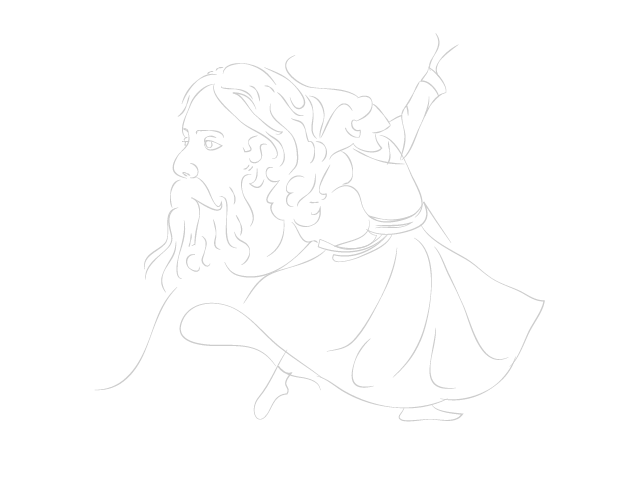
A Little about Tagore
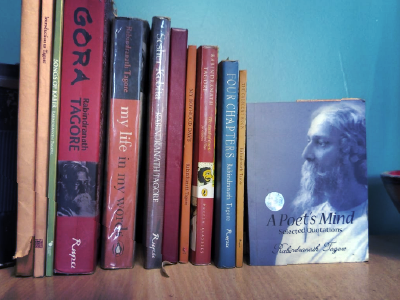
Rabindranath Tagore—poet, philosopher, writer, painter. He was a visionary whose creative spirit shaped modern Indian thought and literature. As a young boy, he spent long hours in his garden, writing poems inspired by nature. Over time, his art grew more profound, infused with religious and philosophical depth, becoming a source of inspiration for humanity. His works carry a rare innocence and simplicity, yet they surprise with daring passion and spontaneity, unfolding new meanings each time they are read.
Tagore was also known as Gurudev (tap to know more)
Known as Gurudev, Tagore revolutionized Bengali literature with works such as The Home and the World and Gitanjali. His contributions extended far beyond poetry—into short stories, essays, letters, plays, and paintings. Gitanjali, his most celebrated collection, earned him the Nobel Prize for Literature in 1913. His versatility is most evident in his poetic styles, but also in his music: he composed over 2,000 songs, now known as Rabindra Sangeet, which remain central to the cultural heritage of Bengal in both India and Bangladesh.
Tagore’s oeuvre is vast: more than a thousand poems, nearly two dozen plays, eight novels, countless short stories, and a rich body of prose on literary, social, religious, and political themes. He was not only a mystic and visionary but also a painter and philosopher, dedicating entire chapters of his thought to poetry and aesthetics.
Among his most significant essay is Religion of an Artist (first published in 1936), where he reflects on the spiritual and creative essence of art.
A Tiny Bit about Sufi Mysticism
Sufi Mysticism or Sufism is often described as the mystical dimension of Islam, a tradition that emphasizes direct experience of the divine. The word myein, meaning “to close the eyes,” captures the essence of mysticism—not as a refusal to see, but as a deeper vision, an inward seeing. Mysticism, across religions, is the pursuit of union with the Absolute, expressed as Reality, Wisdom, Light, or Love.
Sufism is also known as the Mystical Dimension of Islam (tap to know more)
Scholars frequently describe Sufism as the spiritual core of Islam, though debates persist about its origins. Some argue that its practices predate Islam, suggesting that Sufism is less a doctrine than a way of life—a disposition of submission and alignment with the divine will. ‘Islam’ itself, means “submission to God.” It began with the revelations to Prophet Muhammad in 610 CE, marking the rise of a monotheistic tradition. Islam, Christianity, and Judaism share common roots in the belief in one Divine Reality. Sufis affirm this universality, seeing the same divine light reflected across different faiths and mystical traditions.
For the Sufis, the ultimate goal is this union with the Divine. Their practices celebrate the moment of becoming One with God, which they regard as the highest spiritual attainment.
THOUGHTS ON ART AND AESTHETICS
TAGORE’S
Tagore describes art as a mysterious world. This world is one that cannot be measured or analyzed, but only felt through emotion. Art grows out of impulse, nourished in the depths of consciousness, much like the Sufi symbolism of divine darkness, where the intensity of light appears black. In this hidden soil, art becomes the vehicle of expression, leading toward divine love and beauty.
For Tagore, art arises from two faculties: creation and enjoyment. Both act spontaneously, giving art its purpose. Yet he resists defining art too rigidly, believing that definitions limit vision. Instead, he sees art as the soul’s impulse toward joy and freedom. The Sufi mystics echo this, calling the bliss of art unspeakable—a moment of ecstasy, a nearness to God. For them, aesthetics is inseparable from spiritual discipline, and art is carried on the wings of beauty and inner expression.
Art, then, is not didactic. It does not instruct but delights. Philosophy may argue, religion may command, but art liberates. As Tagore writes in The Cycle of Spring: “We [poets] set men free from their desires.” Art becomes a pathway to freedom, revealing invisible connections to eternity.
SUFI ART
Sufi art may best be described as the expression of the divine. It embodies the soul’s search for God, guiding both artist and audience toward spiritual enlightenment. Each form of expression—whether word, note, or movement—becomes a step closer to the sublime.
The principal modes of Sufi artistic expression are music, poetry, and dance. These are not mere performances but acts of devotion. The words of mystical poetry, the rhythms of music, and the movements of dance resonate with the cosmos, echoing humanity’s universal quest for the divine. In this sense, Sufi art transcends aesthetics; it is fundamentally spiritual, a medium through which the soul communes with the eternal.
Tagore calls art a mysterious world, nourished in the depths of consciousness and inseparable from emotion. It arises from two faculties—creation and enjoyment—and resists rigid definition. For him, art is the soul’s impulse toward joy and freedom. Similarly, Sufi mystics describe art as unspeakable bliss, a moment of ecstasy and nearness to God. Both traditions elevate art beyond instruction. Philosophy may argue, religion may command, but art delights and liberates.
Comparative Themes
BEAUTY
Tagore sees beauty as an extension of consciousness, a truth that separates light from shadow, real from unreal. For him, beauty is inseparable from truth. The Sufis agree, calling beauty al-haqiiqah—the reality itself. Plato too said, “Beauty is the splendor of Truth.”
Beauty, then, is divine, omnipresent, and absolute. Ugliness, by contrast, is only a distortion of truth, born of imperfect realization. Using the sun as metaphor, the Sufis explain: when blindfolded, one cannot see the divine light, and the world appears void. This is not real darkness, but only a shadow of truth.
When a person aligns with the law of creation, harmony arises. This harmony—samanjasya—is expressed through art, which becomes universal, varied, and free. Beauty leads to love, and love moves toward the infinite, the ultimate purpose of existence. Thus, “beauty is truth and truth is beauty.”
Both Tagore and the Sufis see beauty as divine. It is the foundation of art, the aura that lights all existence. True vision comes only when freed from self-interest, when worldly temptations no longer cloud perception. Then art becomes pure creativity, detached from worldliness, and the soul becomes the originator of beauty expressed in form.
EXPRESSIONS & EMOTIONS
Art, for Tagore, is the building of man’s true world—the living world of truth and beauty. It is the enlargement of personality through imagination. Art is self-expression, the overflow of the soul.
It is not mere feeling, but the creation of form. Ideas take shape through the subtle skill of the artist. Sculpture, painting, music, poetry—all are reflections of personality, where emotions, thoughts, and feelings find form. Love, hatred, pleasure, pain—all are woven into art, making it intimate and unique.
The artist does not simply copy reality. Through deep intervention, the artist simplifies and reveals essential structures. Art is thus the illumination of personal feeling, not abstraction. It is woven with the fibres of human nature, expressing the living truth of the soul.
CREATIVITY, SPIRIT & SURPLUS
Tagore believed that creativity springs from surplus energy—the flood tide of emotion. Out of this exuberance comes art, giving rise to the idea of “art for art’s sake.” Art is born of joy, play, and spontaneity. “In art man reveals himself, not his objects,” he wrote.
The Sufis too see art as an extension of the self, just as God created the universe as an extension of His essence. Each work of art reflects heavenly inspiration, making the experience spiritual. Creativity is the union of soul and divine, producing beauty, love, and harmony.
William Blake once said, “The road of excess leads to the palace of wisdom.” Tagore echoes this: art originates in the region of the superfluous. It is the daughter of joy, the outlet of man’s overflowing energies. Each form of art, then, is a reflection of the Supreme, shining with the beauty of its Maker.
Soul’s path to Freedom
Placed side by side, Tagore’s aesthetics and Sufi mysticism reveal a shared vision: art as a spiritual discipline, beauty as truth, and creativity as the overflow of the soul. Both traditions affirm that art is not merely aesthetic but a pathway to freedom, harmony, and union with the divine.
This is part one of the exploration of the comparative analysis of Tagore’s Thoughts on Aesthetic seen alongside Art in the Sufi Mystical Tradition.