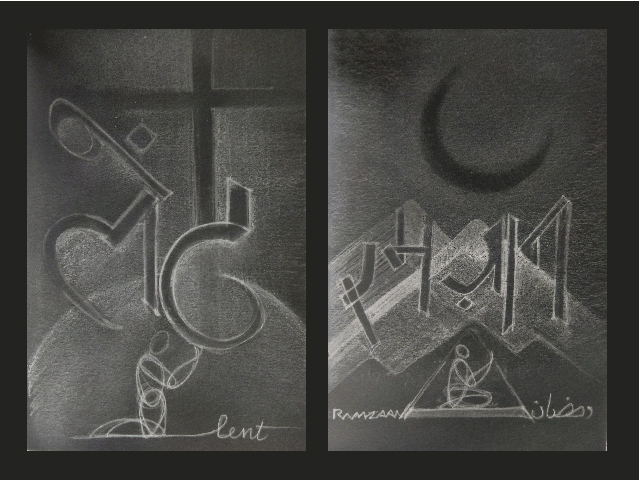
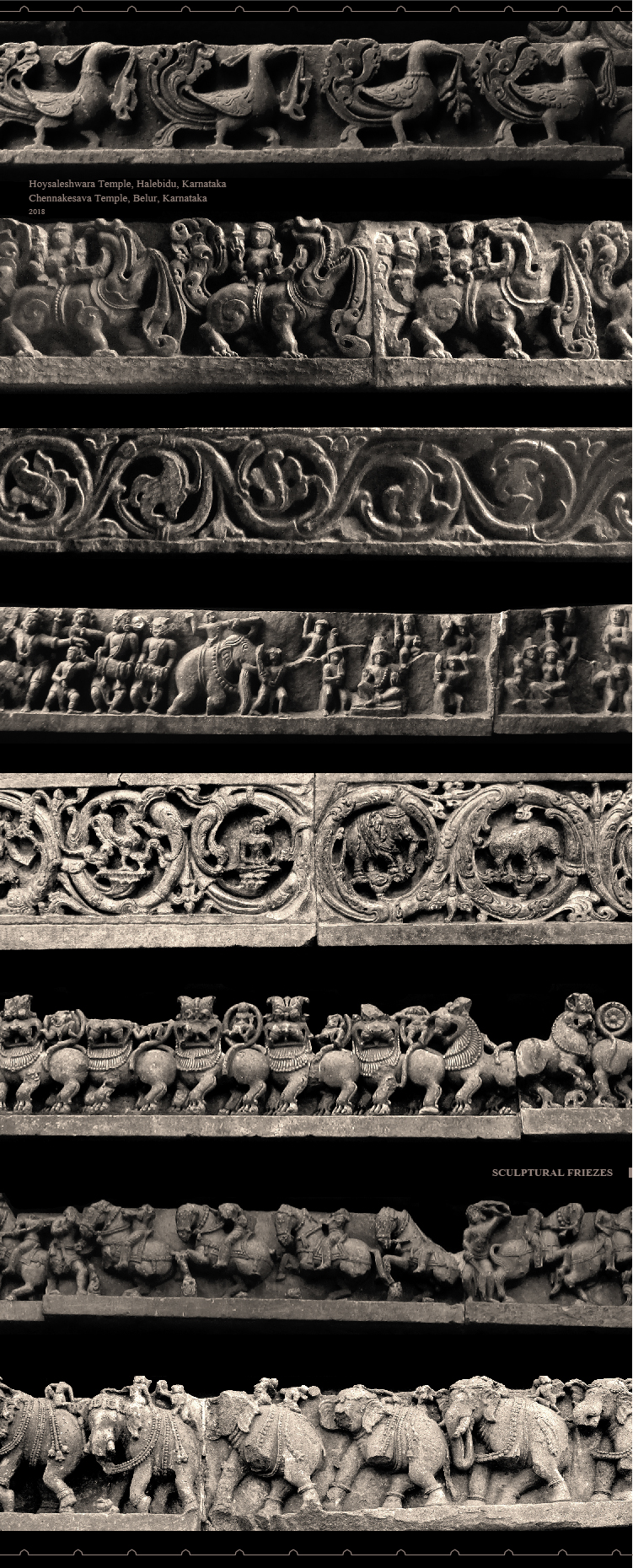
A saint’s death anniversary is celebrated across cultures, and it is a day for one to remember the saint’s deeds, be in reverence, and pray. It is a day to reflect upon the meaning of death and eternal life. Rather than it being an occasion to mourn, the death of a saint is celebrated.
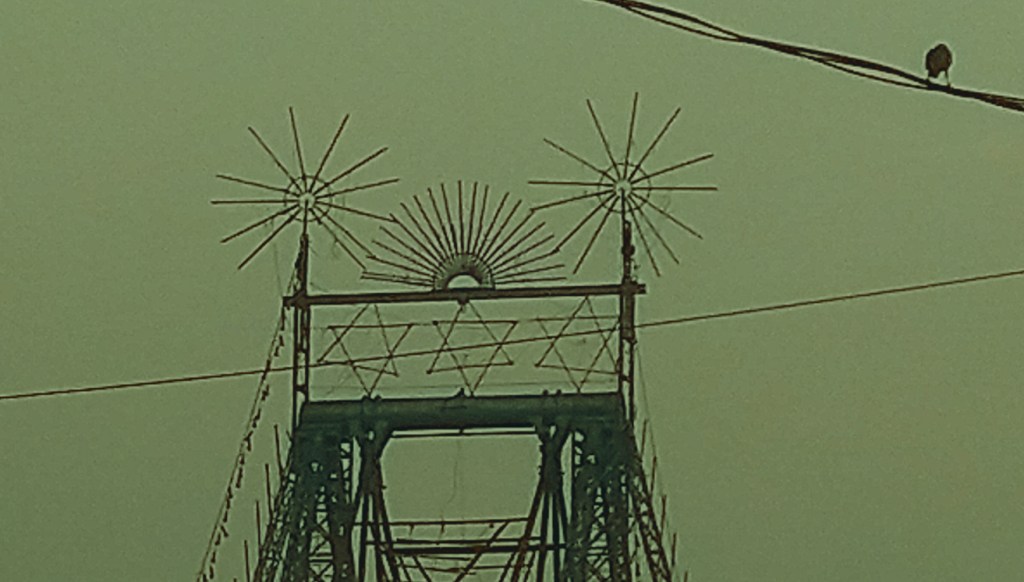
URS, A CELEBRATION OF A SUFI SAINT
Sufis across the world celebrate Urs on the death anniversary of the saint. It is an occasion of festivities and celebration, a great time for believers to come together, and visit the shrines of their saints. Urs, also pronounced as Urus, is an occasion of celebration for many around the world. It may last over several days.
URS AT MAHIM, MUMBAI
One such Urs takes place annually at Mahim, Mumbai since several years. This six centuries-long custom is visited avidly and is organized in close association with the city’s police force.

SECTION 1 :: Urs and its meaning in Sufism
There are tree different concepts that are associated with the meaning of Urs: Wedding, Death Anniversary, and Union. These are explained below:
Urs as a Wedding
Marriage ceremony. Marriage anniversary. Nuptials.
It stems from the arabic ‘urs‘; urus literaly means wedding. In Islam it refers to a contract of civil law. The signing of a marriage contract is typically accompanied by processions, special clothing, and feasts. In some countries it is accompanied by music and dancing.1
Urus is a significant cultural event in many societies. There is a common theme of celebrating love and commitment.
Ghoonghat Chak Le Sajna Sajan Je Sharmaan Kahnun Rakhiyyan Ve
Ajj Mukk Jaan Hasrataan Deed Diyan Tu Ghund Nu Utha Ke Betha Reh
Saadi Jaan Jandi Ey Te Payi Javey Tu Zulf Saja Ke Baitha Re
: :
Lift this veil (reveal yourself) beloved one!
Let my desire to get a glimpse of you come to an end and just remain seated before me. Let me die watching you, you just keep your hair locks intact.
– Bulleh Shah.2
From elaborate ceremonies to intimate gatherings, the essence of Urus is a beautiful testament to the human experience of love and partnership. It serves as a reminder of the values and traditions that have been upheld for generations, enriching the tapestry of cultural diversity around the world.
The Urs, celebration also features food tastings, bazaar, and various kinds of shops.
WEDDING (as a spiritual marriage)
Sufis consider themselves as lovers and the God as their beloved. Urs in this form is a spiritual meeting or a union of the two. The celebration of urs at the time of a Sufi Saint’s death is considered to be a wedding day of the saint.
Urs as a Death AnniverSary
Urs, In India it refers to commemoration of the death date of a revered Sufi saint.2 Marking the death anniversary of a saint it is celebrated widely across the world and in India.
It serves as a time for rejoicing and embracing joyous celebrations, rather than being observed as a day of mourning.
If a heart has no burning love for God, it is merely a dead piece of flesh, but if it possesses the love of God, it is a mirror of the divine presence and blessings.
– Sheikh Bahauddin Zakariya.4
Usually celebrated in India, in and around the dargah (a shrine or a tomb) of the Sufi Saint; the Urs rituals are generally performed by the custodians of the shrine. The atmosphere in the urs is filled with an aura of festivity, marked by lively gatherings, devotional music, and vibrant cultural events.
The devotees refer to the Saint as the lover and God as the Beloved. The devotees celebrate this day as a spiritual death, as the lovers meet in Eternal Union.
DEATH AND LIFE (in sufism)
Fana is dying before one dies and Baqa is eternal life within god. (both these concepts explained ahead). The saint (on this day) saint is completely absolved within the Divine.
Urs as Union
As urs is a wedding, in context of a sufi saint this wedding is tying of the knot between the lovers (the sufi) and the beloved (Divine).
Everything is the beloved, and the lover is a veil,
Living is the beloved, and the lover is dead.
– Mathnavi by Rumi.5
It represents the coming together of two people in a special bond of marriage. This commemoration serves as a testament to the enduring influence of Sufism and the unity it fosters among diverse communities; reaffirming the values of joy, love, and spiritual connectedness. The person who achieves fana and is in the state of baqa experiences eternal closeness to the divine. They live in harmony with God’s intentions and characteristics. They are free from all ties and restrictions, reflecting God’s beauty and greatness perfectly.
In Sufism, the union of a saint with God is the ultimate goal of Sufi experience. It is a moment for both spiritual reflection and communal revelry, as people come together to honor the legacy of the Sufi Saint and partake in the uplifting traditions associated with Urs.
FANA/fanāʾ (concept in sufism)
Fana is a state of “passing away” or “dying before one dies” or “annihilation” (of the self). It is annihilation. It is a state of complete denial of the self and realization of God. In Sufism, a designation for the extinction of individual limitation in the state of union with God.3 It is an enlightened state, a state of awareness of an intrinsic unity (with God). It is correlative of Baqa. Fana is similar the the concept of samadhi in Indian culture.
BAQA/baqāʾ (concept in sufism)
Baqa is a state of “subsistence” or “permanence” and a state of like with God, through God and for God. It is a mummit of the mystical journey, a destination or the abode. Baqa is “remaining” in God after annihilation, eternal life and it is subsistence in God. It is the stage where the seeker finally gets ready for the constant vision of God. Hence, it can be termed as Divine Eternity.4
WASL/WUSUL, WAHADAT AL-WUJUD (concept in sufism)
This is the absolute awareness of an intrinsic unity or tauhid5. Spiritual Union or joining, is a state of non-duality. Where there the seeker and the goal are not different, where the God and the believer are not different. In this state of Divine Union is described as the submersion of the drop in the ocean. It is the opposite of separation, and duality. Wahadat al-Wujud is made up of two words: wahadat and wujud. Wahadat is unity and wujud means to be or to exist. Thus, wahadat al-wujud is the Necesary Being, or the Unity of Being or Existence.
SHAB-E-VISAL (in sufism)
The night of union with beloved, the night in which an accomplished faqir or saint dies.
Concept of a Death Anniversary as an urs has been taken from the hadith of two angels – Munkir and Nakir – who will question the soul on the faith and deeds of the grave, and if they pass the test will tell the pious to sleep with restfulness and comfort just like a bride, who will not be awakened by anyone except for the person who is most beloved to her.6
The word for a bride is uroos in Arabic and urs or marriage celemony becomes a ‘religious ceremony celebrating the union of the soul of a deceased pir or the saint with Supreem Spirit (the saint’s disciples gather round his grave and read the fatiha7).8
SECTION 2 :: Makhdoom Baba & the Mahim Dargah
Urs is widely celebrated in India near the shrine of a holy saint and has a fair/mela as an integral part of the festivities. This practice has become an integral part of the sufi tradition and is visited by people from across various religions. People here, share more universal emotions of joy, love and faith.
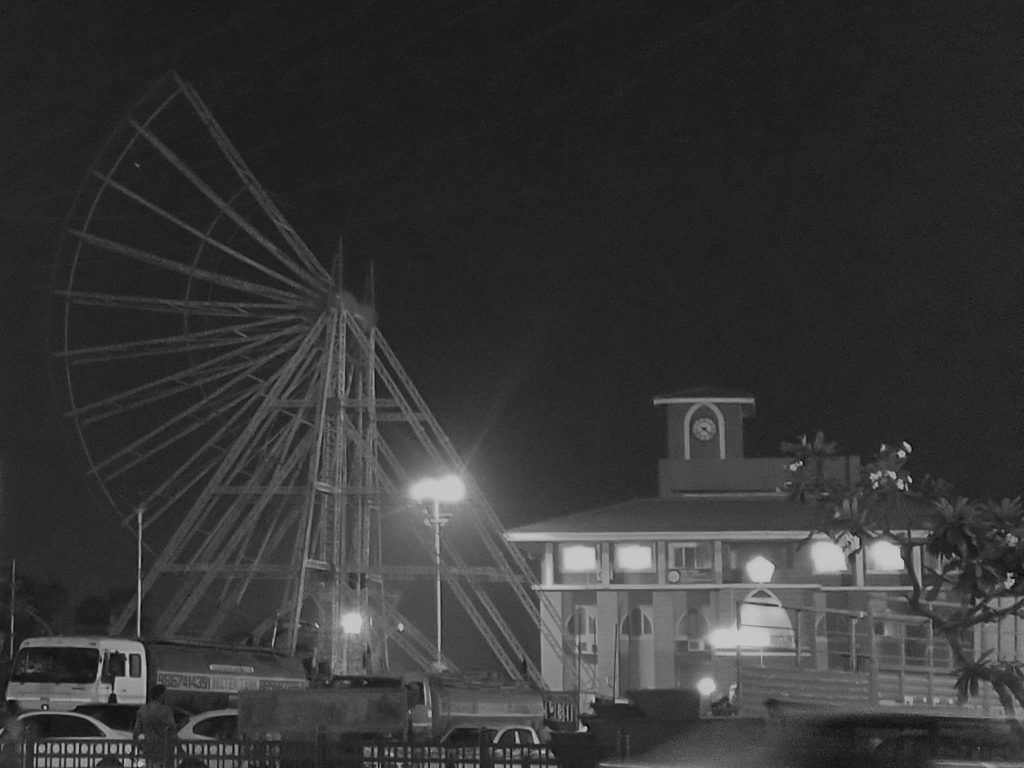
MAHIM URS MELA / माहीमची जत्रा
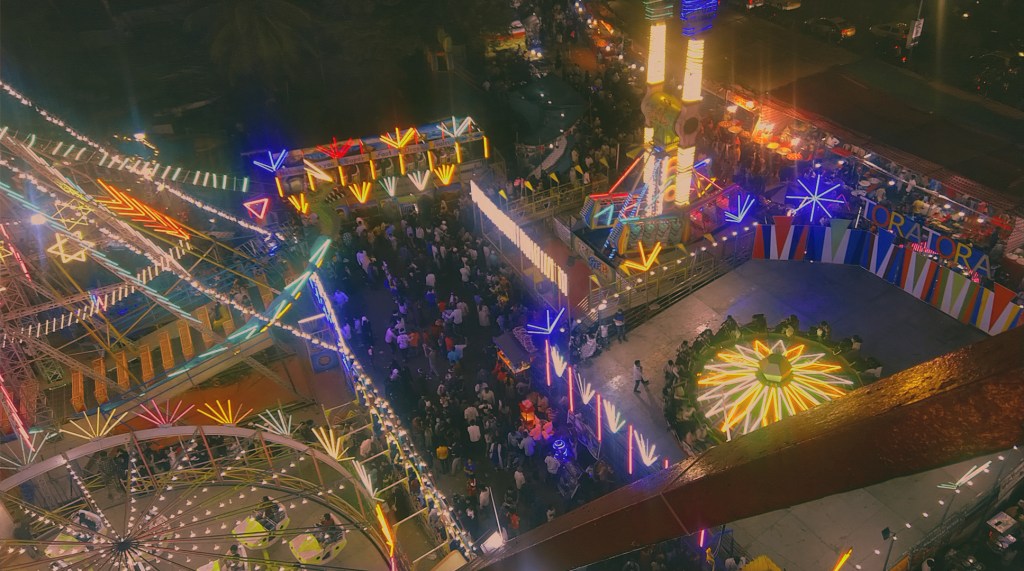
Every year, the Urs festival is held at the Mahim Dargah (shrine of Hazrat Makhdum Fakih Ali Mahimi) to honour the life of the patron saint. This Annual Mahim Mela that is a part of the urs. It is observed over a period of ten days around December12. The mela is celebrated on an open space on the beach at Mahim Causway, right outside the Mahim Sagari Police Station.13
Hazrat Makhdum Ali Mahimi
Makhdoom Ali Mahimi Shafi’i / Hazrat Makhdum Fakih Ali Mahimi also known as Makhdoom Baba (1372-1431) was a great Sufi, a saint and scholar, who lived along the western coast during the reign of Tuglaq dynasty. He is also known as “Qutb-E-Kokan”.
He was born from in a family of Arab travellers, who settled in the island of Mahim.
HAZRAT (concept in sufism)
Hazrat: a title of honor, bestowed upon a person, especially a saint. It is a term associated with dignity and respect, as well as nearness. The word comes from Hazara, which means to be present. Hazrat would mean nearness or closeness in place or in relationship.
MAKHDOOM (concept in sufism)
Makhdoom: a title of honor, bestowed on to saints. The meaning being: one who is served, in other words, the Master. 9
QUTUB (concept in sufism)
Qutub (“pole, axis,” heighest member in the hierarchy of the saints or the leader of the Sufi hierarchy. Qutub is the “pole” or “pivot” or ghauth, “help”. The saints govern the universe, and theu are entrusted various duties in maintaining the world order. The qutub is the virtual center of spiritual energy upon whom the well-being of this world depends. Qutub is the heighest spiritual guide of the faithful.1
NAWAYATH (community)
Nawayath / Nawait are an Indian community and a subgroup of Konkani Muslims. They speak the Nawayathi dialect of Konkani.
mahim Dargah
Situated in Mahim, this is the shrine of Makhdoom Baba and is visited avidly by people throughout the year. After his death in 1431, he was buried in Mahim.
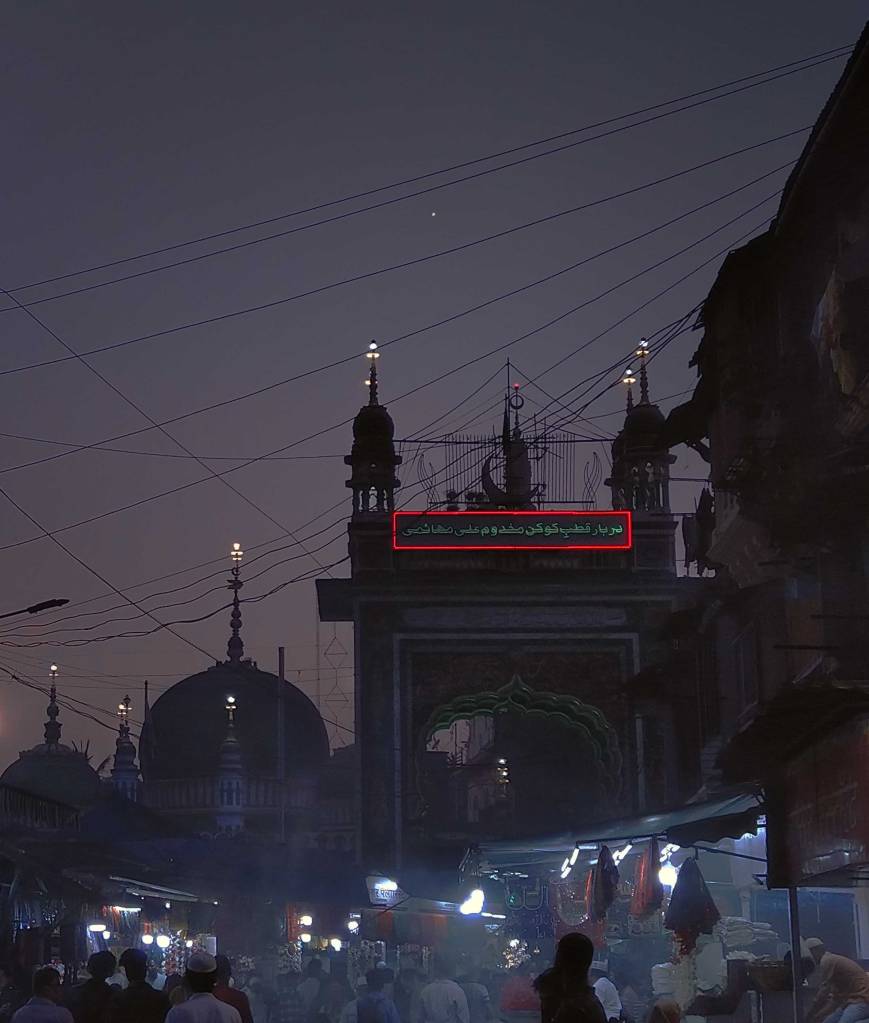
Makhdum Fakih Ali Mahimi was renowned for his miracles, and the dargah is visited by all without the distinction of religion, cast or creed.
The shrine observed the saint’s 610th Urs (death anniversary) of Makhdoom Baba this year.12
DARGAH / दरगाह (shrine)
Often built over a tomb, a dargah is a shrine or tomb built over the grave of a revered religious figure, often a Sufi saint or dervish. They become spaces for believers and devotees to visit, seek blessings, make offerings and are revered pilgrimage sites.
MAHIM / माहिम (island)
Mahim was one of the seven islands that originally made up Mumbai. The name Mahim is derived from the ancient Mahikavati meaning “miraculous” in Sanskrit. Other historical names for the area include Mahimawati, Maijim, and Mejambu.2 During the 13th and 14th centuries, Mahim, was ruled by the Gujarat Sultan Ahmed Shah, who was a very important ruler in Gujarat. Thane was also under his rule. Makhdoom Baba had tied the knot with the Sultan’s sister.
Mahim police
The Mahim Police Station is located next to the dargah, and Makhdoom Baba is considered to be the patron saint of the Mumbai police force.17 It is believed that the saint offered miraculous assistance to the police force in solving tough cases.
A representative of the Mumbai police is the first to offer the “chaddar” (shawl) at the tomb on the first day of the festival.
The local (Mahim) police station is built next to it (the dargah) where the saint lived. There is a green steel cupboard in the office of the police inspector, which supposedly contains the saint’s relics. During the 10 days of urs this room is opened to devotees. 12
Urs celebration at a dargha is important for followers and believers of the Sufi Saint. Different silsilahs have different ways to celebrate it and the celebration can go on for several hours, days or even little more than a week. The celebration involves prayers, recitations, qawwalis, sama mehfils, langars, offering of chadars, stalls, mela, fairs, and other festivities. Mahim Urs Mela has been celebrated year after year19 and is visited in huge numbers.
Celebrated since 1910, the event is a ‘gazetted mela‘, as the event is listed in government gazettes (Bombay Gazette16) from the pre-independence days.17
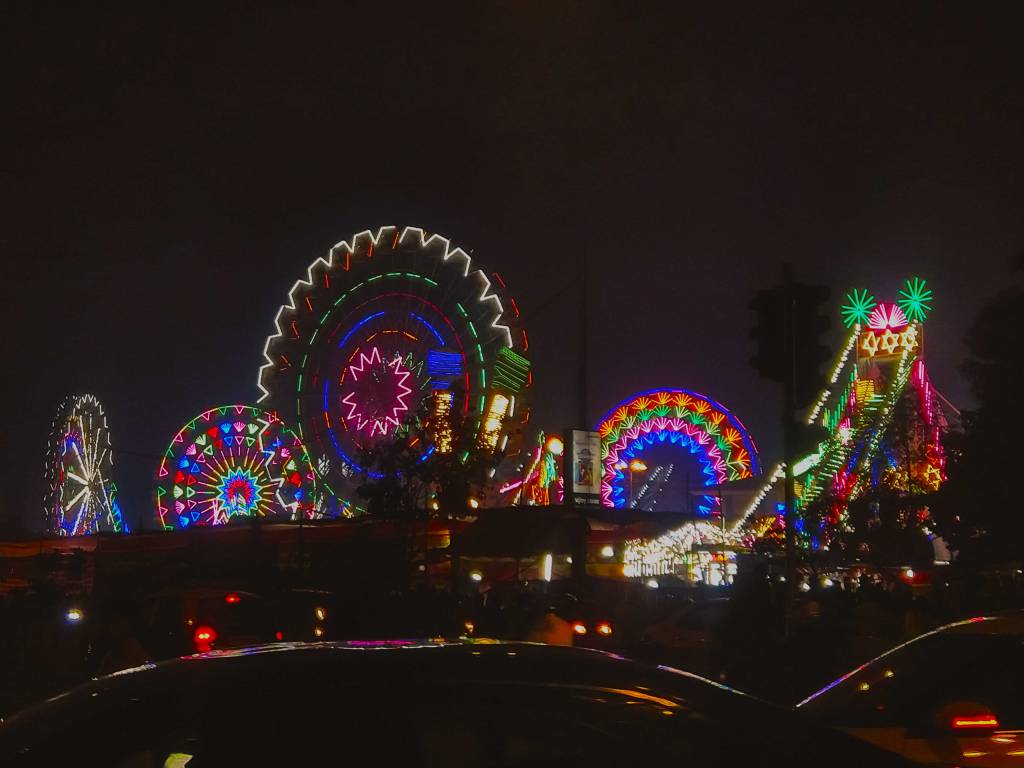
Mahim Urs Mela : A Carnival of Joy
Mahim witnesses the Urs Mela every year. My experiences of the Mela (as a visitor and as a passer-by) bring about thoughts related to Sufi Philosophy. Some of those thoughts are elucidated below. These are purely my own thoughts and do not (so far as I know) have any formal authentication.
MAKING OF THE MELA : The annual fair comes to life through the dedication of a diverse group of individuals collaborating to craft an unforgettable experience for visitors. Every little detail is meticulously tended to, ensuring the seamless operation of the grand event. While each element may seem small in the grand scheme of the fair, their perfectly harmonious coordination sets the entire universe in motion. One might consider this notion as being a ‘cog in the wheel’, but when viewed in the broader context, it becomes evident that each individual and group operates as atoms in their own right, contributing to perfect harmony. This is when each person in their individual capacity resonates with the rhythm of the universe. This flawless unity echoes the Divine rhythm.
In Sufism, there exists a deep-rooted belief which proclaims that each thing possesses intrinsic perfection that is uniquely tailored to its being. Each of these things have a fitting perfection to that of its opposite. Much akin to the formation of an intricate mosaic, where the beauty of each piece resides in its perfect placement in the entire composition. The Necessary Being – the embodiment of pure beauty and splendor. For in the realm of Eternal Perfection (kamāl), this Being reigns supreme. It’s a resounding testament to the highest principle of beauty, transcending time and space. Sufis continually polish the mirror of their souls so that they become perfect reflections of the divine. This is true about each individual too, who performs ones own duty.

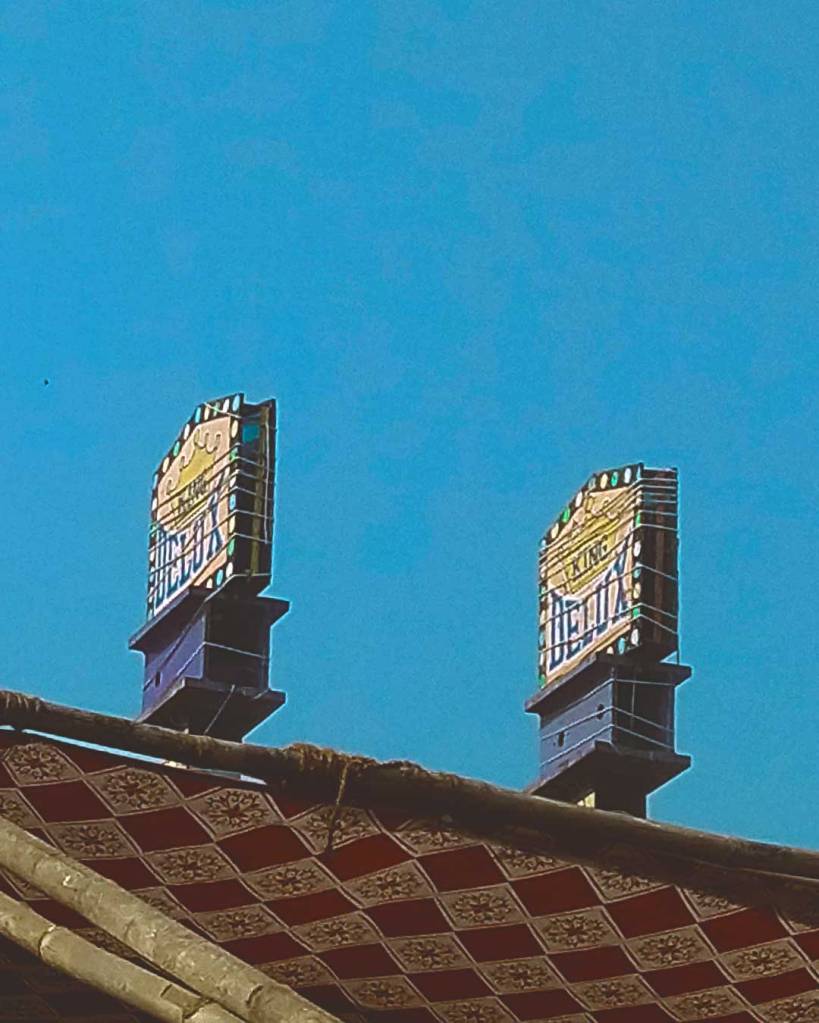


SPIRIT OF THE MELA : Sufism constantly whispers to our souls, reminding us of the precious gift of life and the boundless mercy of the Universe. It paints a vivid picture of the eternal delights of existence and the profound nature of love. Sufism urges us to live in the present moment, to cherish every breath we take. Just as the Divine embodies perfection, it also encompasses mercy (raḥma) and wrath (ghaḍab). These dual qualities are mirrored in the roles of God as the ‘life-giver’ (muḥyī)—embodying the gentle and merciful aspect of God—and as the ‘death-giver’ (mumīt)—reflecting the fearsome and wrathful aspect. Another attribute akin to mercy is bounty (faḍl), which is intertwined with grace and virtue.
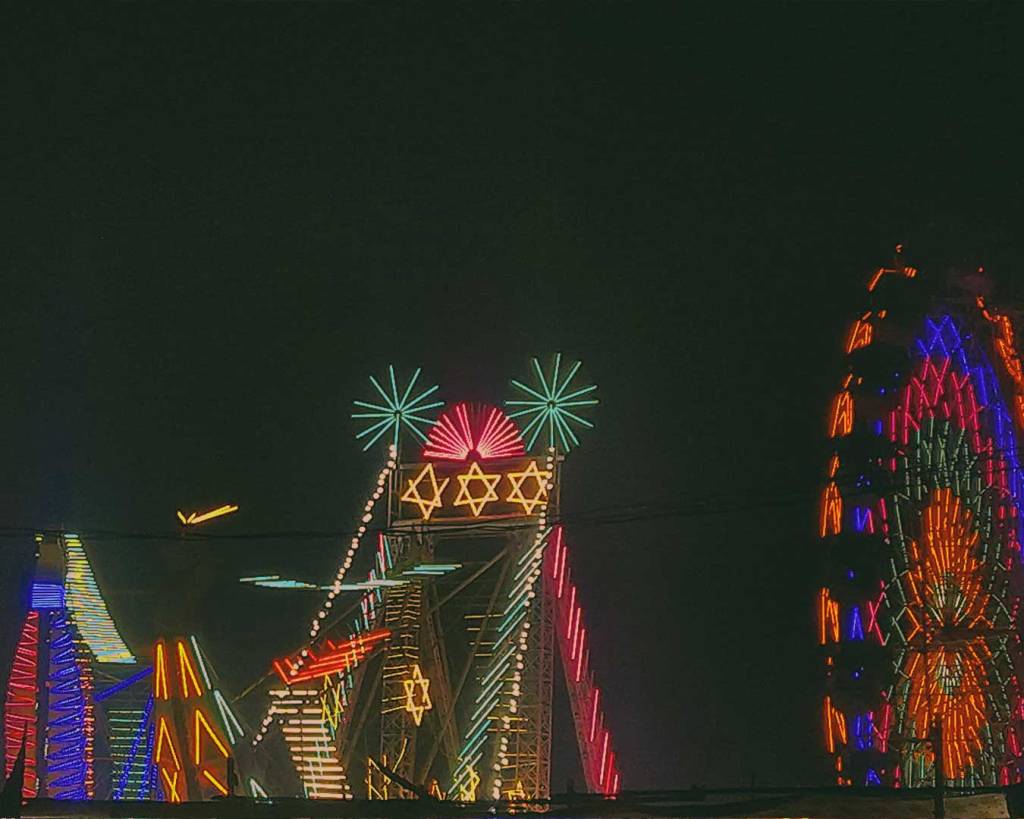
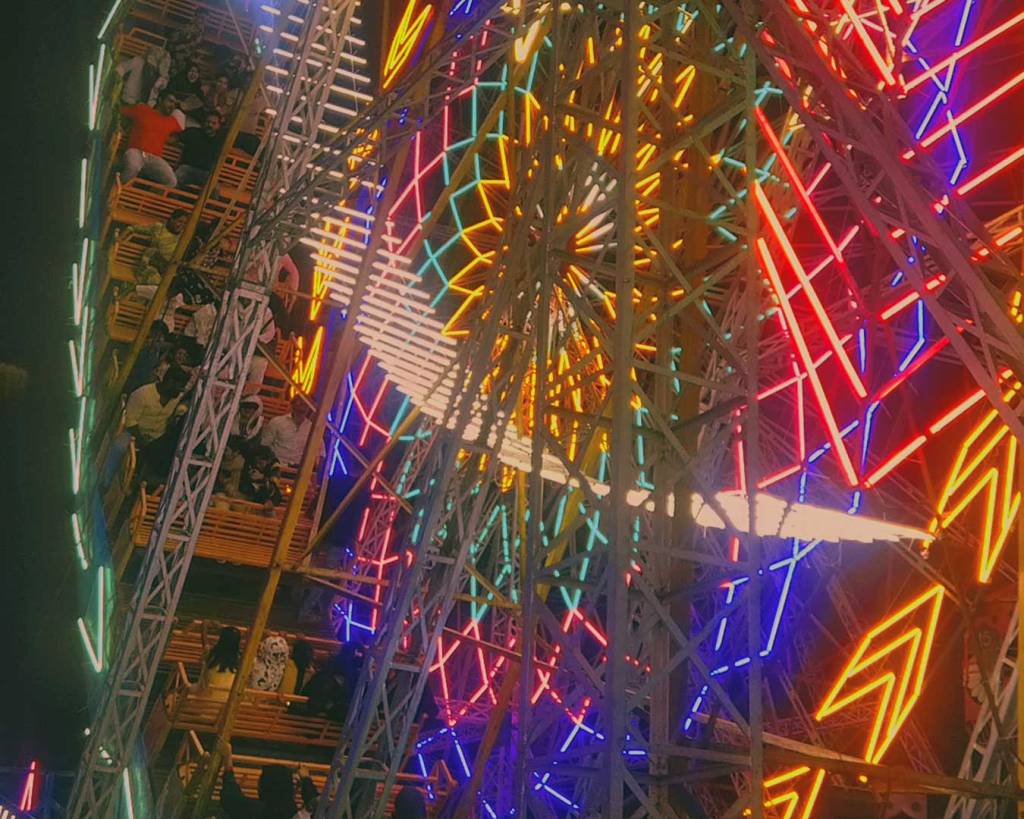
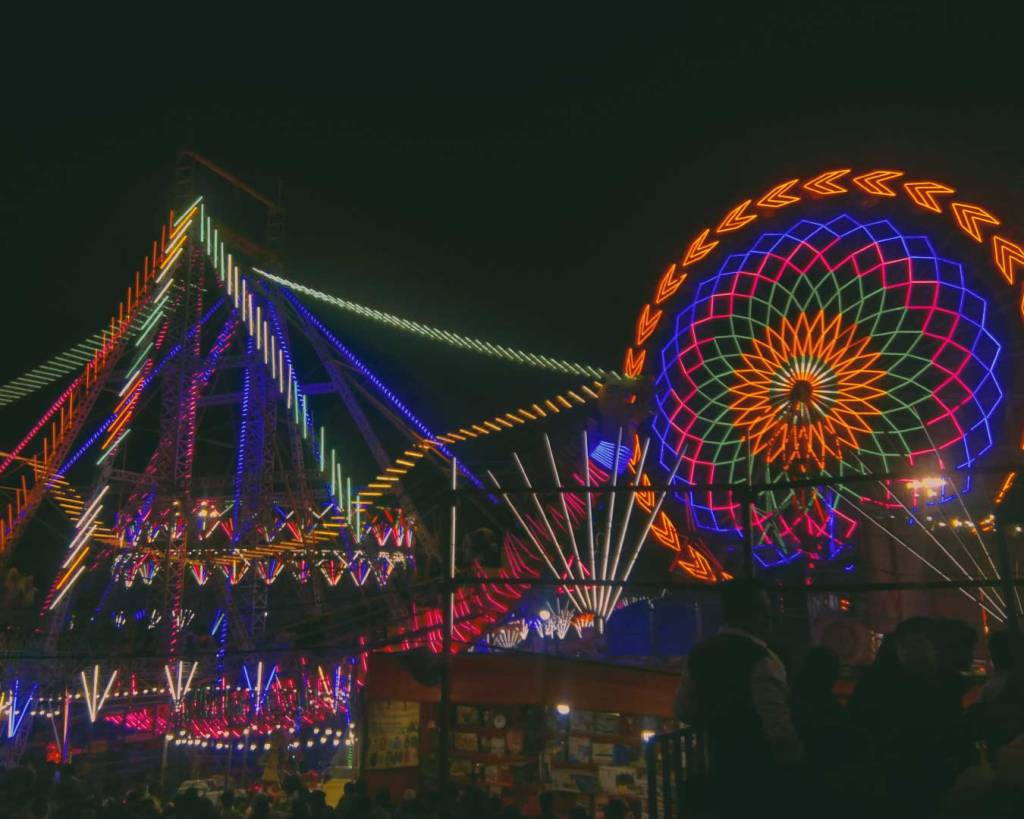
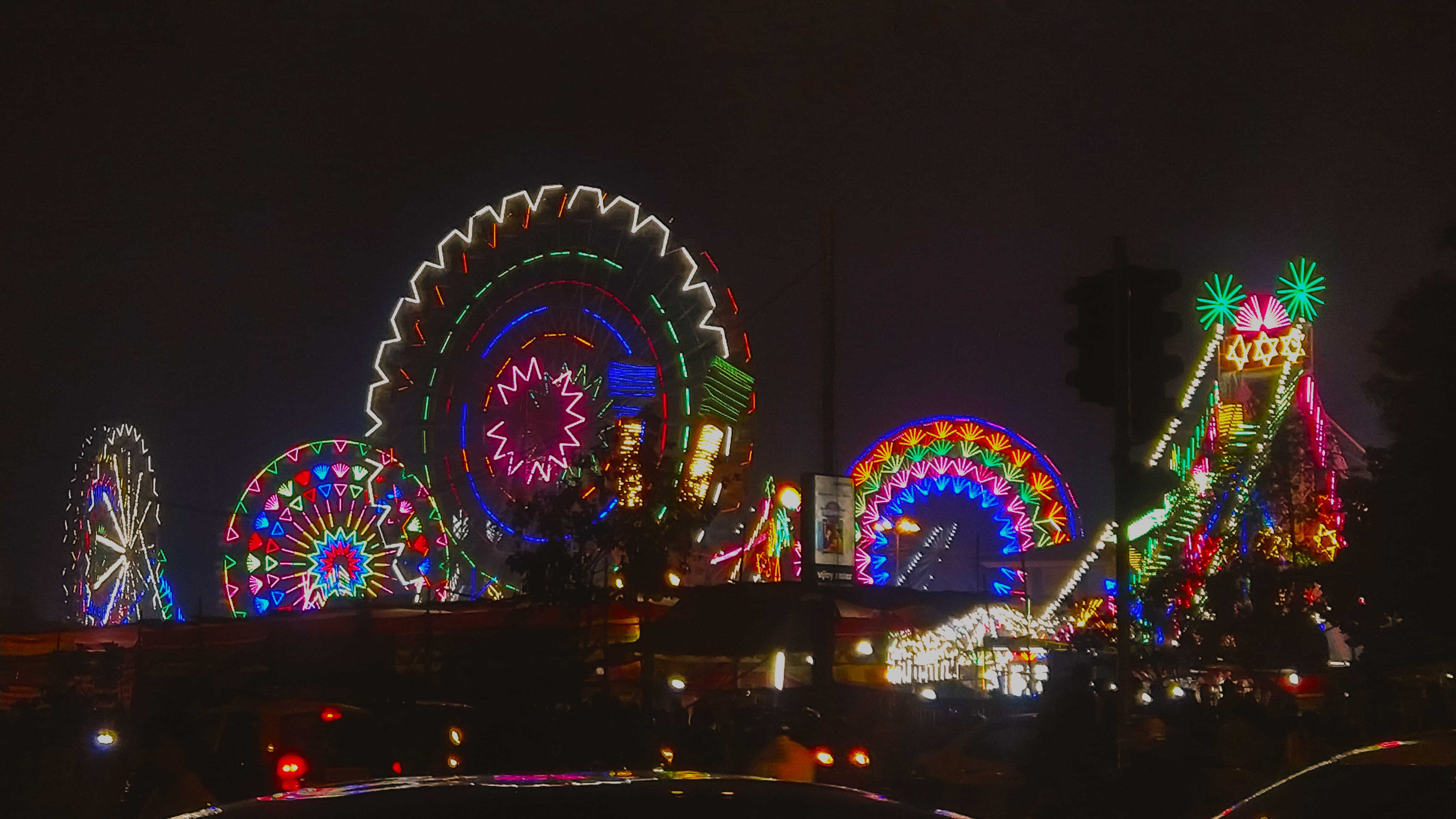
The myriad rides at the fair, embraces each of these facets that evoke a torrent of emotions within the experiencer. While on these rides one is led through a kaleidoscope of emotions: the pure elation, the surrender to an unknown force, the intoxicating sense of ecstasy, otherworldly physical sensations, the fear of a fall, a daring leap of faith, an adrenaline rush, and an anticipation of even greater ecstasy.
While spiritual bliss is incomparable to any earthly delight, the mela offers a conduit to experience these raptures at a subconscious level.
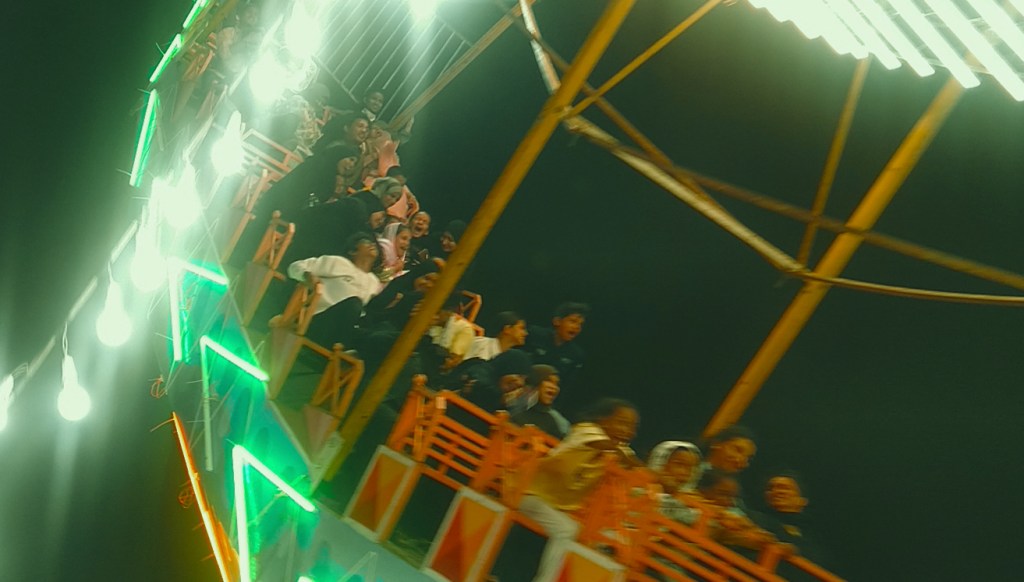
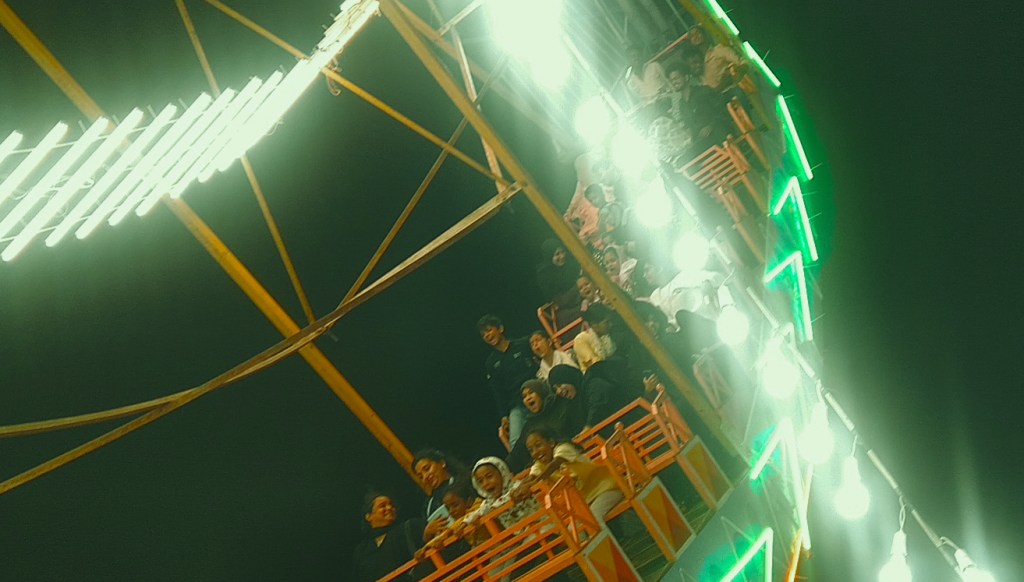
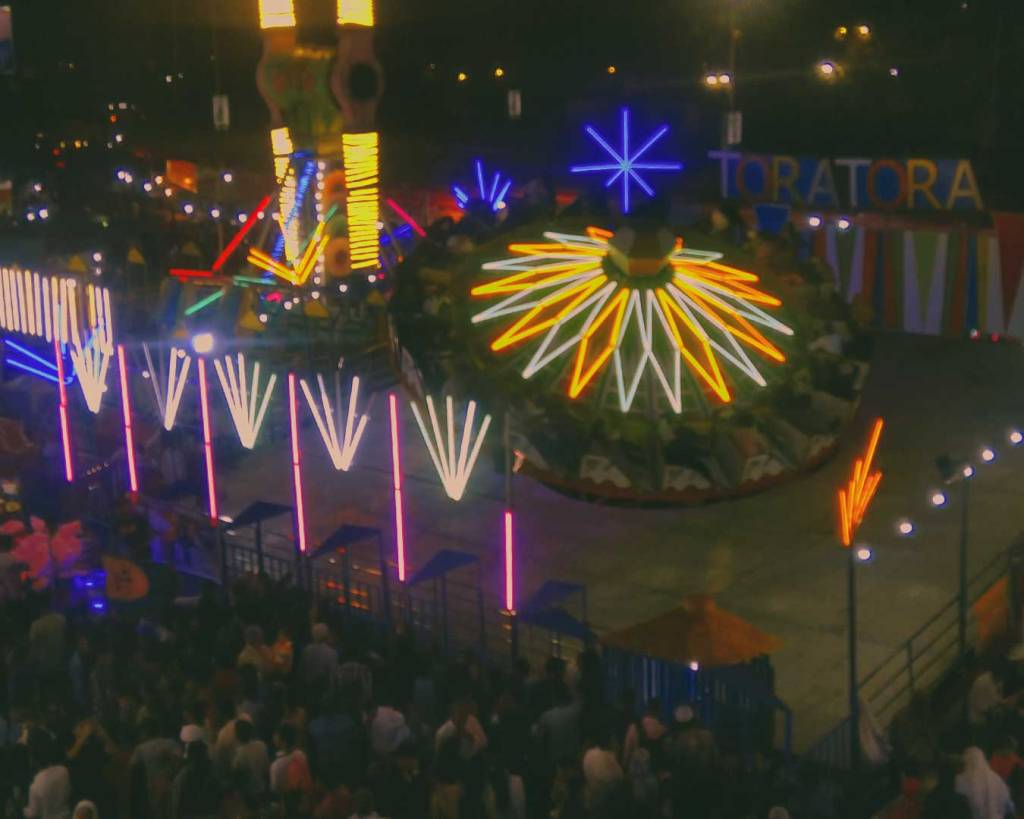
CIRCLE OF JOY : Movement embodies the core joy of at the mela. All the rides cheerfully come to life around a central pivot. Some rides delightfully rotate, some gracefully revolve, some rhythmically oscillate, and then there are those that do it all at once, creating excitement and a superfluous spur of energy.
Spinning around the axis, one feels a connection between the body and mind, and one shares the same rhythm of heartbeats and breaths with others who join in on the ride. All is in unison as all partake the same journey, the same dance.
The rides start slowly and then accelerate, making one aware of different sensations in your body and mind. Ones experience there, is a kind of inner movement while one is conscious, spinning around a powerful central force.
When the rides slow down, the passengers are transported back to reality with the sensations of spinning in their bodies and minds. Everyone physically and mentally, gradually returns to a normal state of being, with the sensory memories and feeling of ecstacy from the ride.
DANCE OF ECSTACY : Whirling or Turning is the core movement in a Sufi dance. Turning in ecstatic whirls around oneself is said to dissolve ego and one become one with the all. This dissolution causes a mystical union, and a sance that emerges out of this circular movement is a dance with (and within) God.
Whirling in this entranced nourishes the soul and brings one closer to the heavenly beloved. This is a way of connecting with the Divine while still being a part of the worldly existence. Sufi whirling dirvishes perform this dance with one hand up to receive God’s grace and the other hand down to share it with people. This gesture of their gesture connects the heaven and earth.
In a sema mehfil where the whirling dervishes perform, they whirl around their own hearts from right to left, following the movement of all creation. They rotate on their own axis while orbiting around a central point, like planets around the sun or electrons around an atom. They reach a state of ecstasy, where they lose their sense of self and become one with God.
They finally return to earth after the mystical experience, retaining their awareness and gratitude.
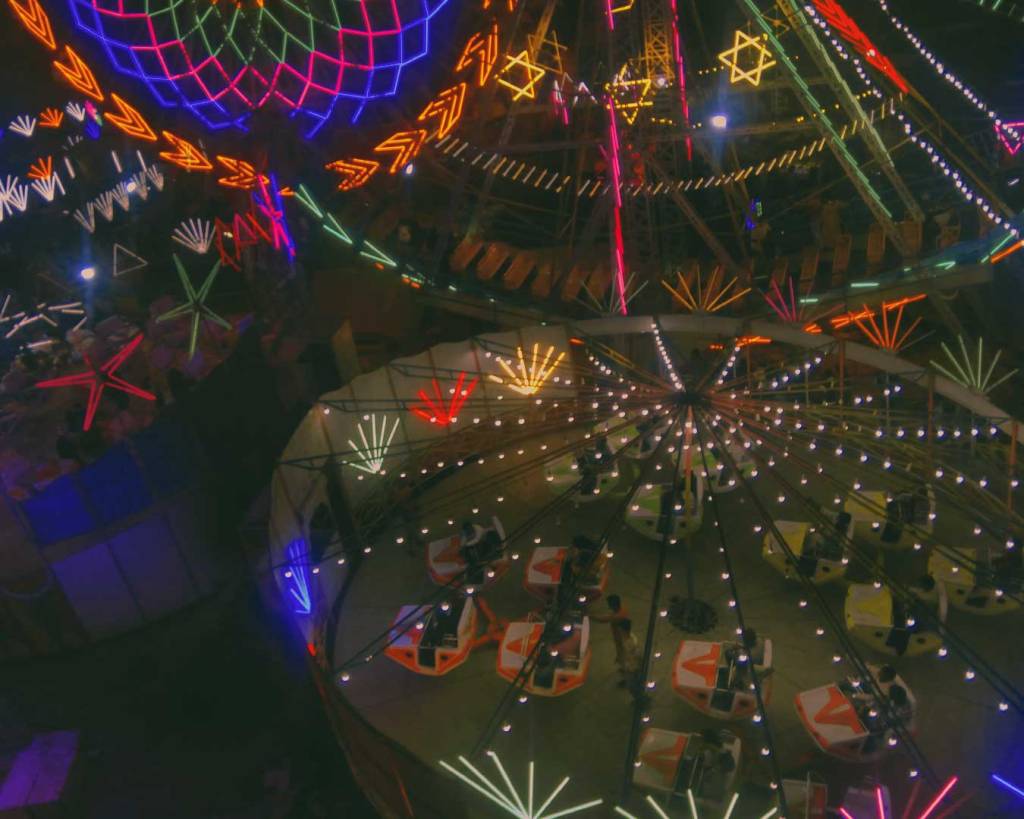
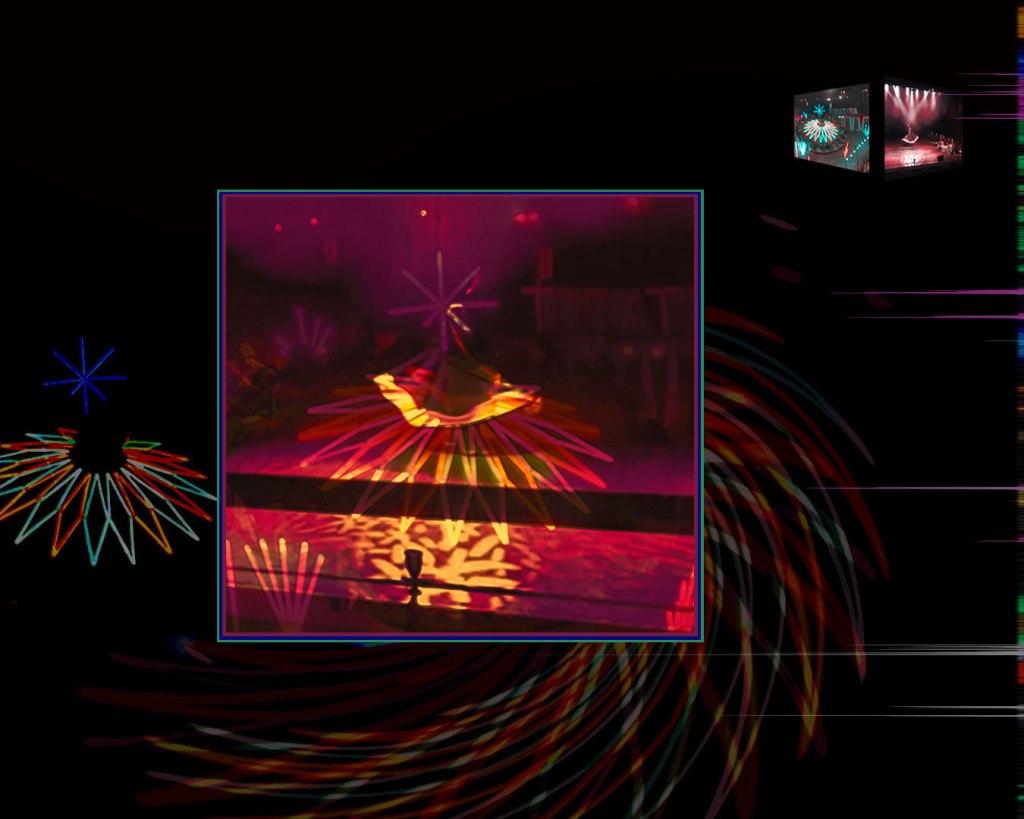
Artwork Details: Tere Ishq Nachaya.
Dance of Love and Divine Ecstacy.
Digital Art | 1350 pixels X 1080 pixels | 96 dpi | Bit depth 24
CONCLUSION :: Mahim Urs Mela: A Sufi Celebration
The Mahim Urs Mela is a wonderful example of how Sufism transcends boundaries and brings people together in a celebration of love, devotion and joy. It is a unique cultural phenomenon and an integral part of Mahim’s cultural history.
What I have written in my blog here is a very tiny speck of that the entirety of the Urs celebration has to offer to the people of the neighbourhood, its visitors from across the city, and to believers from across the world.
This blog is an humble attempt to compile research, facts, emotions, and insights about: (a) the concept of Urs as a Celebration of the Death of a Saint, (b) the interwoven Sufi concepts, (c) my experiences and visuals of the Mahim Urs Mela, (d) a significant part of Mahim’s local history, and (e) the Urs as a commemoration of Mahim’s Makhdoom Baba.
Since childhood, Mahim chi Jatra has always been an enchanting event for me. The carnival, especially its connection to the Mahim Dargah and the Mumbai Police, has consistently piqued my curiosity. As I delved into Sufism and visited the mela, this experience has wonderfully evolved for me over the past few years.
I am happy to begin my first blog about Sufi Philosophy and its Aesthetic Dimensions with this one. :)

Notes, References and Citations:
- Oxford Reference. “Urs,” n.d. https://doi.org/10.1093/oi/authority.20110803114835195. ↩︎
- Bulleh Shah: a Sufi form Punjab. Translation by Fazeel Azeez Chauhan, via Manjari Chaturvedi. ↩︎
- Oxford Reference. “Urs,” n.d. https://doi.org/10.1093/oi/authority.20110803114835195. ↩︎
- Sheikh Bahauddin Zakariya was a poet from Multan. ↩︎
- Mevlana Jalaluddin Rumi: a Sufi from Konya. Mathnawi: one of his most collection of verses. ↩︎
- “Definition of ‘Fana’ – The Dictionary of Spiritual Terms,” n.d. ↩︎
- “Definition of ‘Baqa’ – The Dictionary of Spiritual Terms,” n.d. ↩︎
- “Definition of ‘Tawhid’ – The Dictionary of Spiritual Terms,” n.d. ↩︎
- Safvi, Rana. In Search of the Divine. Hachette UK, 2022. ↩︎
- Al-Fātiḥa : the short opening sura of the Koran used by Muslims as a prayer. ↩︎
- John T. Platts, ‘A Dictionary of Urdu, Classical Hindi and English,’ Digital Dictionaries of Southeast Asia. Web. July 2022. via Safvi, Rana. In Search of the Divine. Hachette UK, 2022. ↩︎
- This corresponded to the eighth day of the Islamic month Jamadul Akhir. ↩︎
- This year’s Annual Mahim Fair took place between December 26, 2023 and January 05, 2024 and last year’s fair was celebrated between December 7 to December 18, 2022. ↩︎
- Hazrat Bibi Fatima, the mother of Makhdoom Baba Mahimi, had a deep commitment to the discourses of Hazrat Makhdum Ali Mahimi. The holy man earned the title of “makhdum” through the divine grace and supplications of her pious mother. (Source: Web: Pir Makhdum Saheb Charitable Trust : Religious Activities – Mahim Dargah.) This is the first dargah trust to get an ISO certification in 2007. ↩︎
- Schimmel, Annemarie. Mystical Dimensions of Islam. Yoda Press, 2007 ↩︎
- Ramakrishnan and Ramakrishnan, “Mumbai: Mahim Fair To Start On December 26; Lakhs Expected To Visit.” ↩︎
- Safvi, Rana. In Search of the Divine. Hachette UK, 2022 ↩︎
- Safvi, Rana. In Search of the Divine. Hachette UK, 2022 (Mumbai police force, which started as a citizen’s militia in the seventeenth century.) ↩︎
- The fair started in 1910, so it is the 113th year this year. ↩︎
- Mahim mela is a gazetted event in Bombay Gazette and draws lakhs of people. The first sandal or floral tribute to the shrine comes from the Mumbai police. While the dargah management conducts the spiritual services at the dargah, the Mahim locality is drown in the mela mood. (Source : Wajihuddin, “CM Shinde Gives Nod to Conduct 10-Day Mahim Mela, Asks BMC Chief to Make Arrangements.”) ↩︎
- Ramakrishnan, Manoj, and Manoj Ramakrishnan. “Mumbai: Mahim Fair To Start On December 26; Lakhs Expected To Visit.” Free Press Journal, December 25, 2023. https://www.freepressjournal.in/mumbai/prayers-food-games-lakhs-expected-to-visit-mahim-fair-that-starts-tomorrow. ↩︎