stories
Etched
in stone
from the ‘Sacred Ensemble’
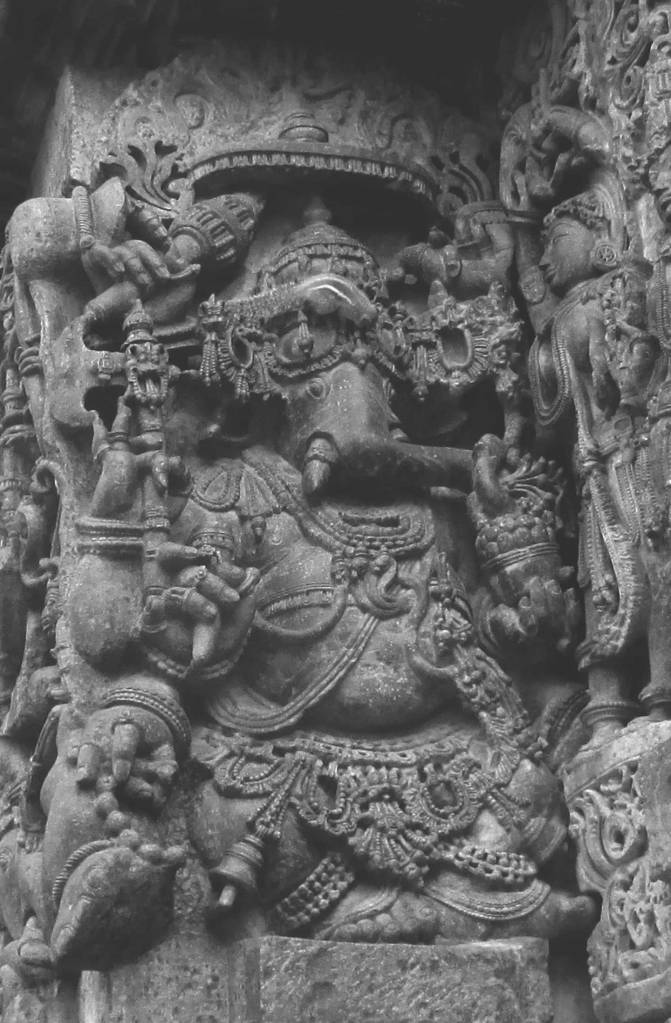
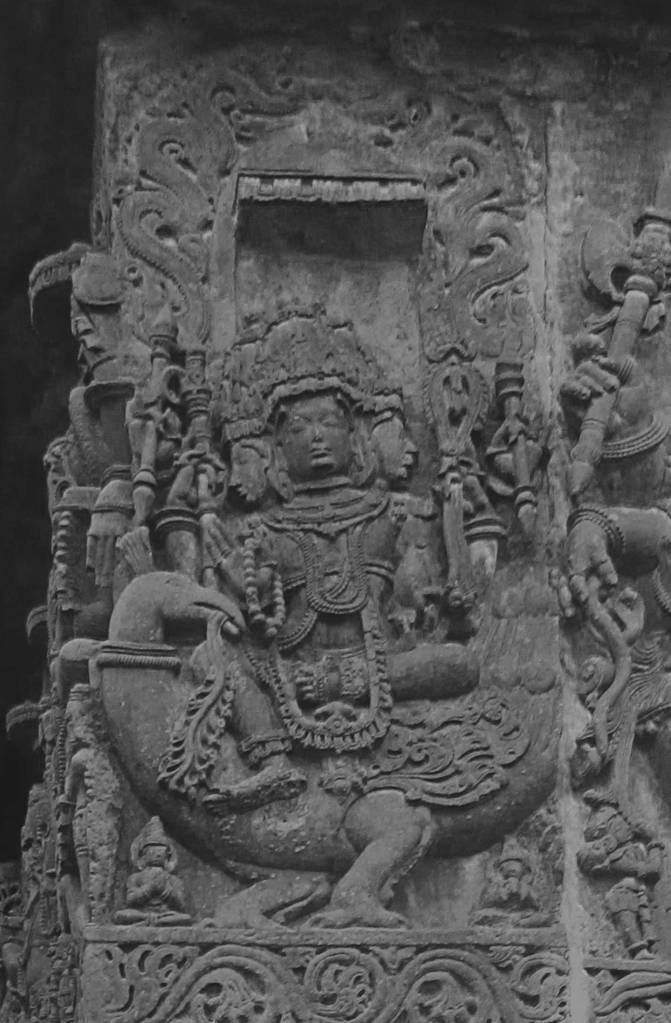
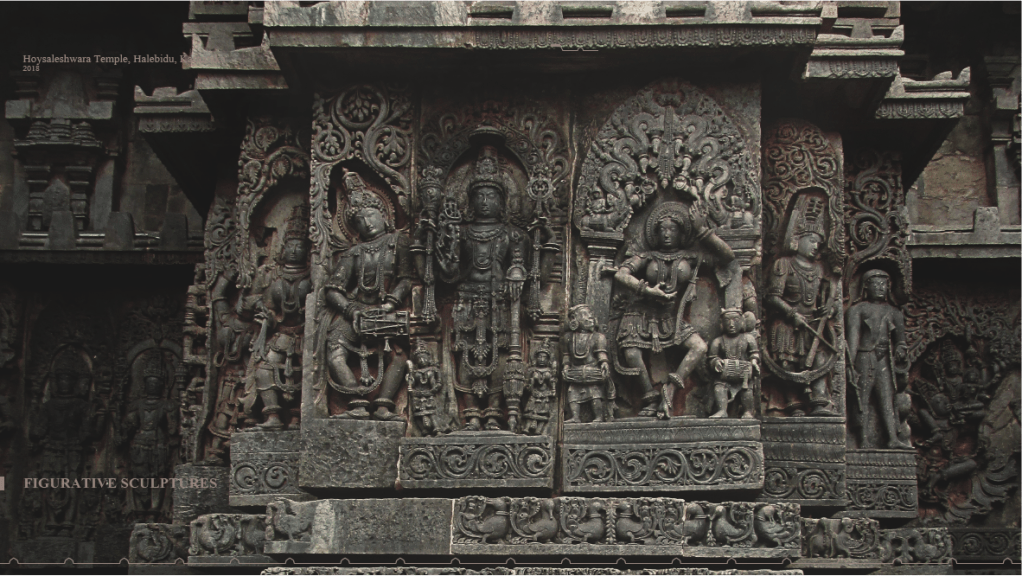
The Hoysala Temples at Halebidu and Belur are exquisite in carved craftmanship, and are rich in visual and narrative imagery. This page displays some of the Figurative Sculptures from the exterior walls of the two temples that form a part of UNESCO’s ‘Sacred Ensemble of Hoysala’. These two temple complexes are the Hoysaleshwara Temple at Halebidu and Chennakeshava Temple at Belur.
Heroism, Devotion, LOVE, and REJOICING THE Cosmic Balance
This treasure trove of stone carvings tell some of the most captivating stories from Indian mythology. From heroic feats to divine acts, these sculptures bring to life the tales of gods, demons, and epic battles. This post takes you on a journey through these stone narratives, exploring the themes of heroism, devotion, and cosmic balance that are narrated in stone.
a scene from a स्वयंवर
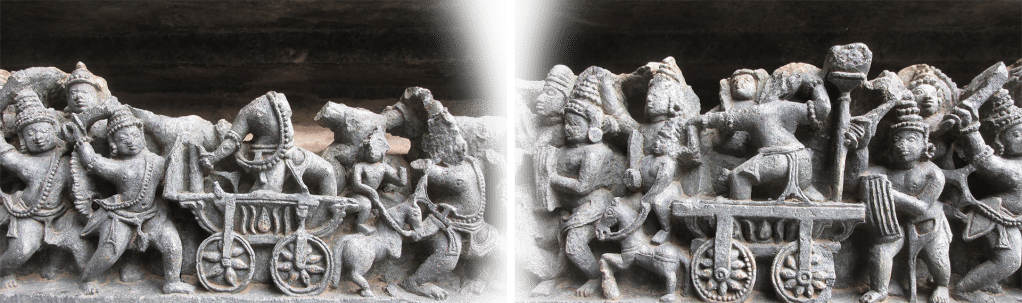
Arjun at Draupadi’s Svayamvara
Hoysaleshwara Temple, Halebidu, Karnataka
Svayamvara / स्वयंवर in Hindu mythology is an event where a woman chose a man as her husband from a group of suitors.
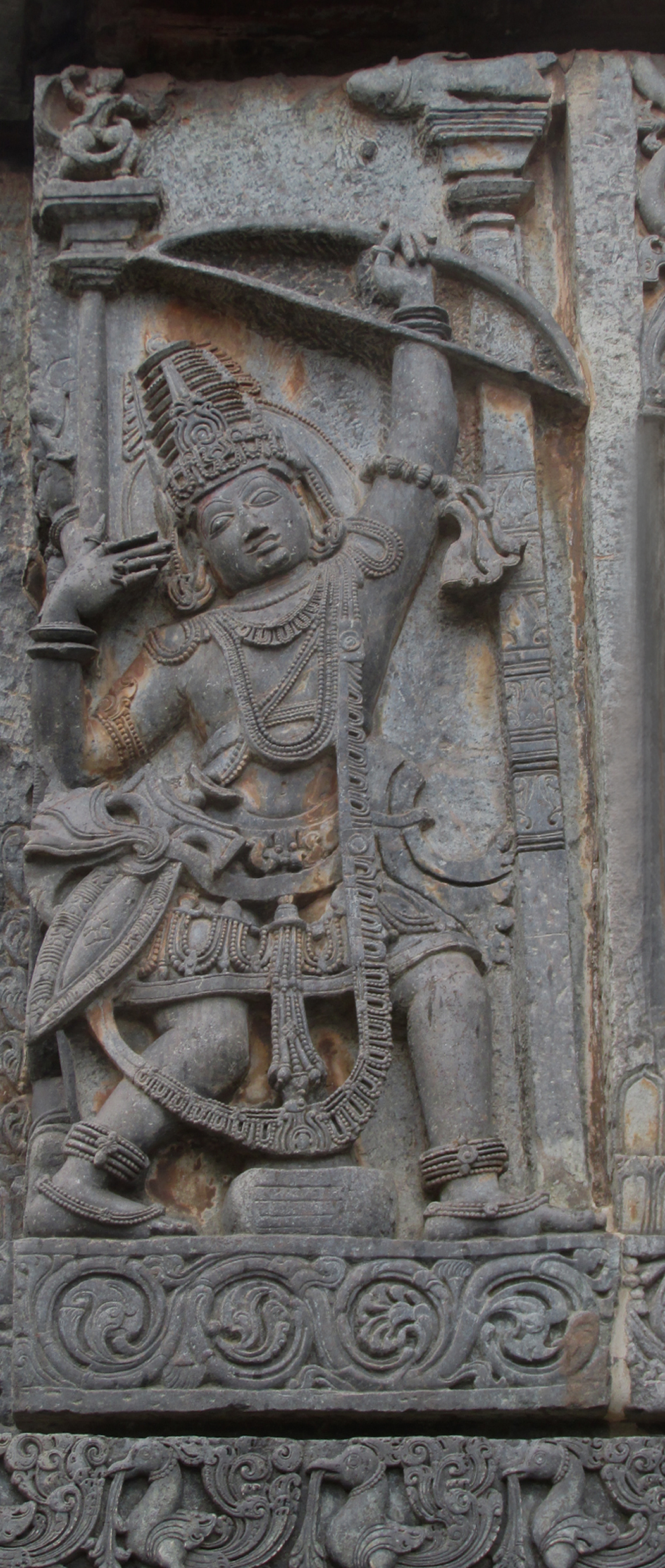
The Golden Fish Challenge
A pole with a revolving golden fish was placed in the centre of the mandap built for the ceremony. The test was to lift, string, and fire the bow to pierce the eye of a golden-fish, by only looking at it in a reflective pool/vessel of water.
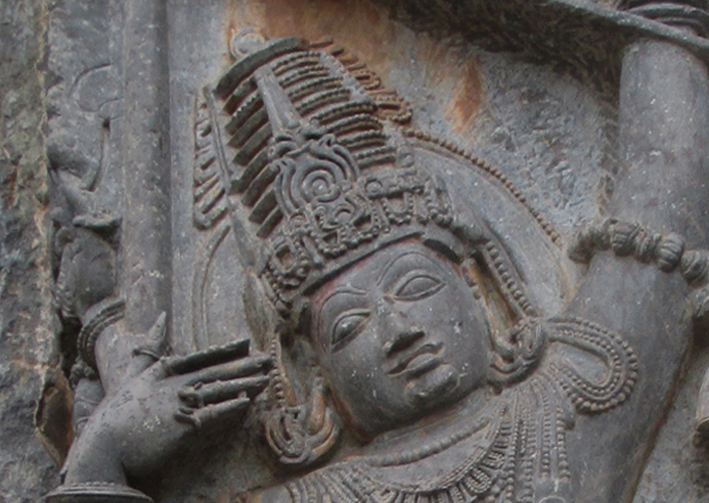
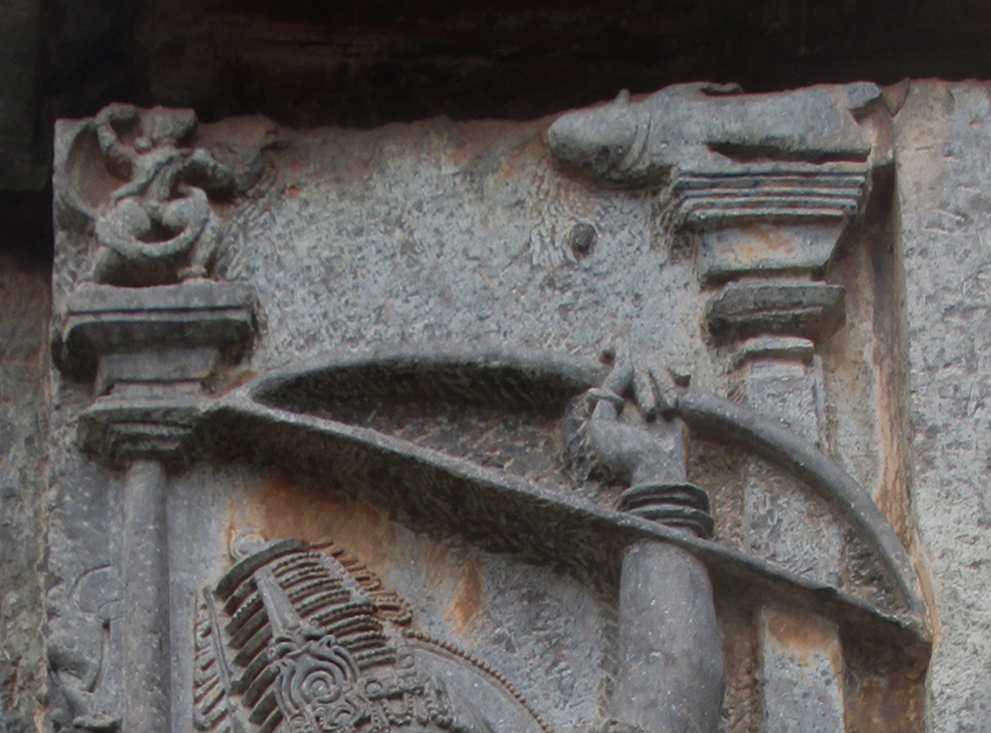
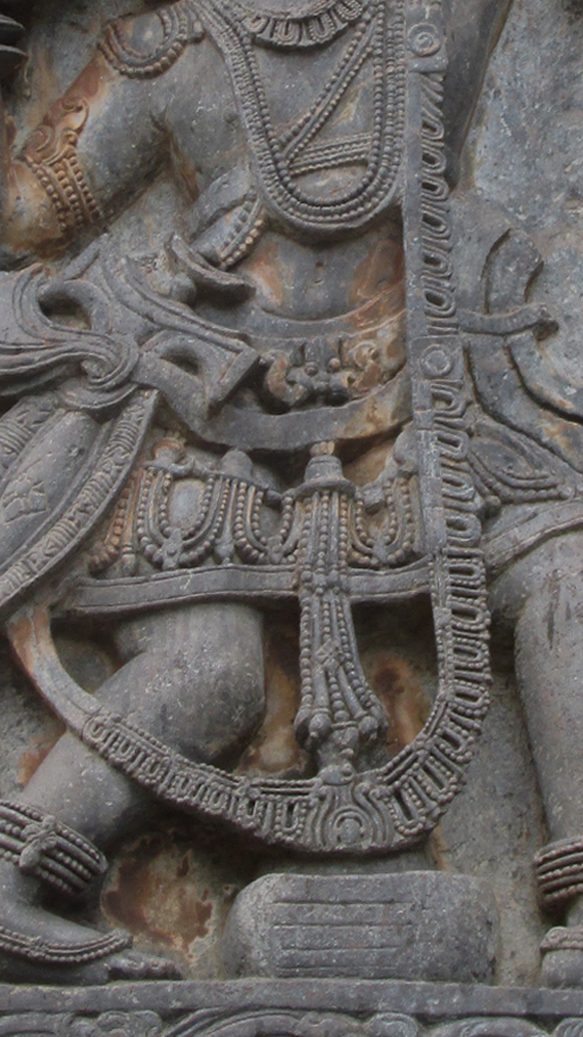
ARJUN WINS DRAUPADI’S HAND IN MARRIAGE
All kings and suiters present at the svayamvara failed to string the bow and got defeated in this task. At last, Arjuna came forward, lifted the bow with one hand, and hit the target, winning Draupadi in marriage.
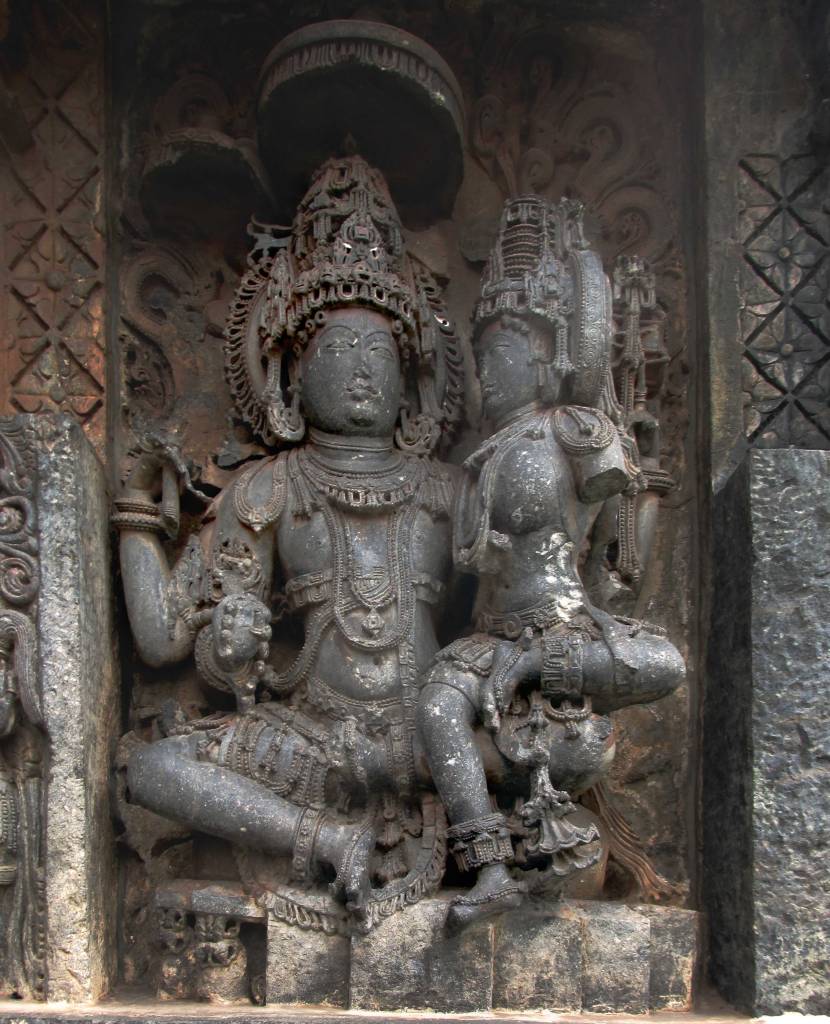
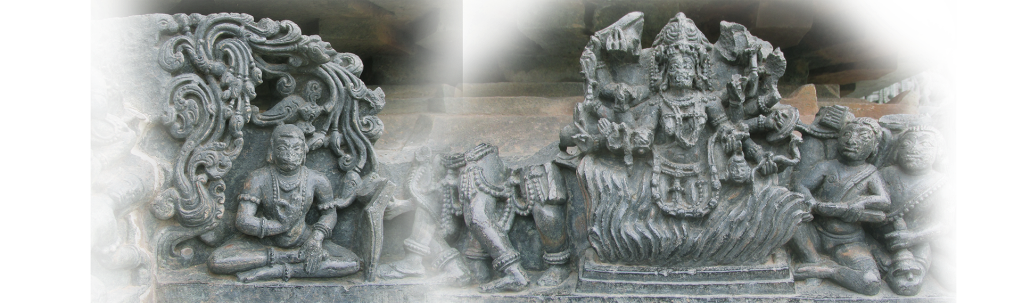
Uma–Maheshwara / उमामहेश्वर is a form of a divine couple. Here, Uma refers to Goddess Parvati and Maheshwar refers to Lord Shiva. They could be reffered to as Gauri-Shankar or Shiv-Parvati too.
Shiva-Shakti, the primal cosmic forces of masculinity and femininity are depicted as a male and a female in the Uma-Maheshwara form, symbolizing the unity and harmony of the universe and all its elements.
The couple is depicted sitting face to face (sammukha mudra), in a relaxed/royal/fine posture (lalit aasana a posture of royal ease). Parvati has one arm embracing Shiva around hs shoulder and neck, and Shiva’s hand wraps her waist (aalingana form/pose) representing the balance of masculine and feminine energies. Parvati, who is seated on his left lap and is usually depicted in a scale, slightly smaller than Shiva.
Shiva is depicted with four arms, each symbolizing a different aspect of his power and personality. String of beads, representing his control over time and the cycle of life. (Probably) a lotus flower (defaced here), signifying his purity and detachment from worldly desires. Shiva’s trident, or trishula, which represents his three functions of creation, preservation and destruction. A hand is turned downwards that holds Uma, his consort, represents the feminine energy and the balance of opposites.
“You could also see some more amourous couples at the Gwalior Gallery“
Uma and Maheshwara are both adorned with a diadem of jewels, as well as royal clothing and ornaments. They sit on a throne with a canopy over their heads and a decorative backrest behind them.
[As the Hoysaleshwara Temple complex contains twin temples of Hoysaleshwar and Shantaleshwar, the depictions of Uma-Maheshwara could also refer to Vishnuvardhana-Shantaladevi, as the Royal Couple.]
Royal Couple
Hoysaleshwara Temple, Halebidu, Karnataka
tuned-in to गोपाल
Gopal playing the flute
Hoysaleshwara Temple, Halebidu, Karnataka
Gopala / गोपाल means “cowherd” [go means “cow,” and pala means “protector.”]
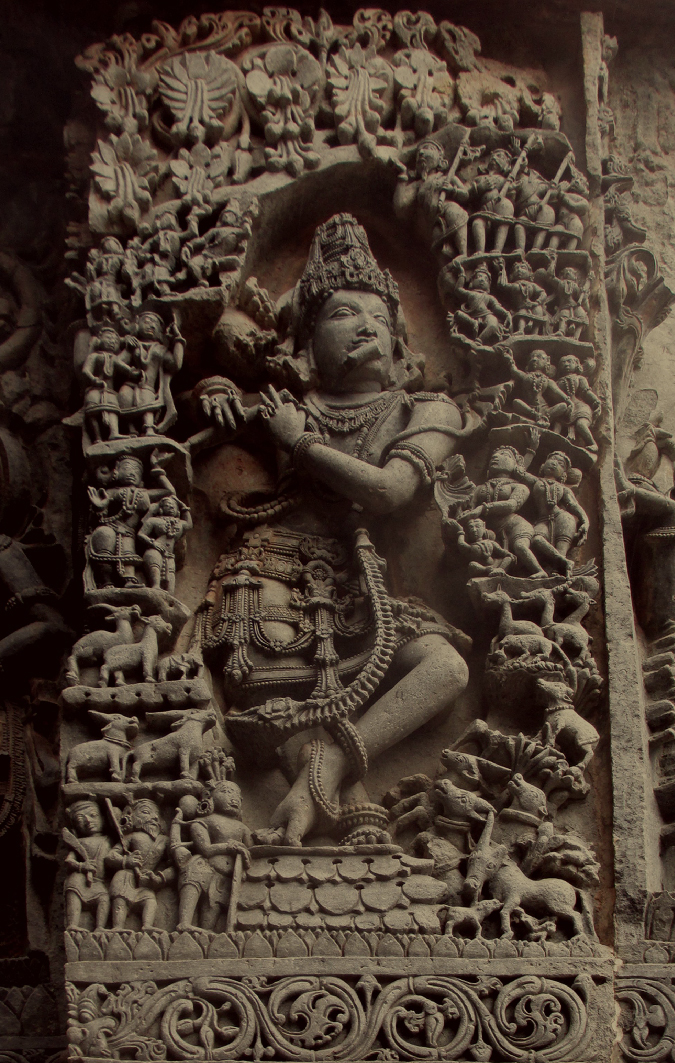
Krishna the cowherd
Cows in Hindu tradition are considered to be sacred. Krishna is often depicted with a cow, and at times in the midst of a playful exchange between the cows and the cowherd girls. Such depictions are celebrated as they symbolize devotion and joy, and a connection of the divine with the natural world.
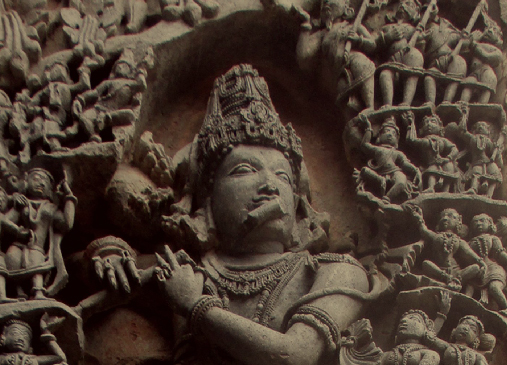

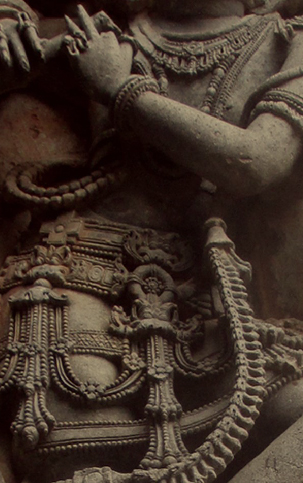
KRISHNA AS VENU GOPAL
Krishna’s Divine flute (Venu) entranced cows abd gopis (cowherd girls) alike. The flute, is a symbol for the breath of the divine across cultures and it symbolizes the soul’s longing for union with the divine. The Venu Gopal imagery is a depiction of harmonious bliss deeply connected with the divine.
slayer of महिषासुर
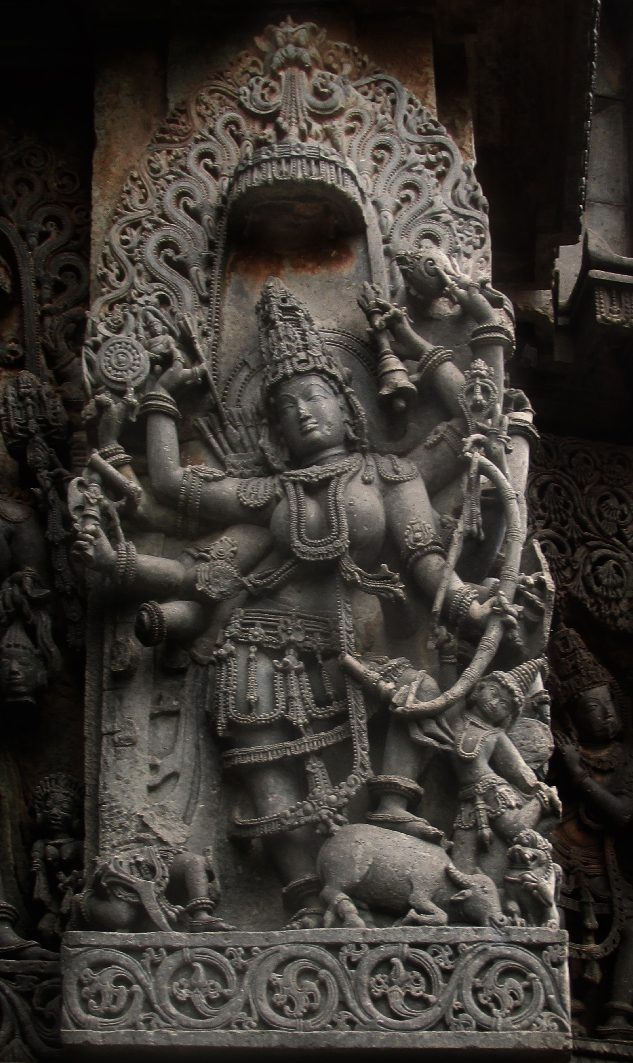
Mahishasurmardini
Hoysaleshwara Temple, Halebidu, Karnataka
Mahishasura / महिषासुर mahish means “buffalo” and asura means “demon”, translating to “buffalo demon”.
Mahishasurmardini / महिषासुरमर्दिनी means The Killer of Mahishasura
DURGA’s Powers & MAHISHASUR’s boon
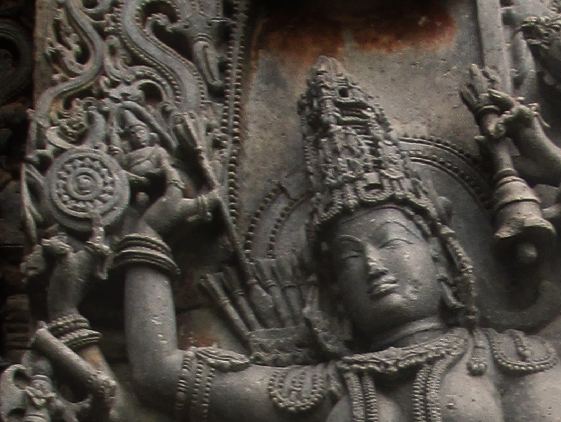
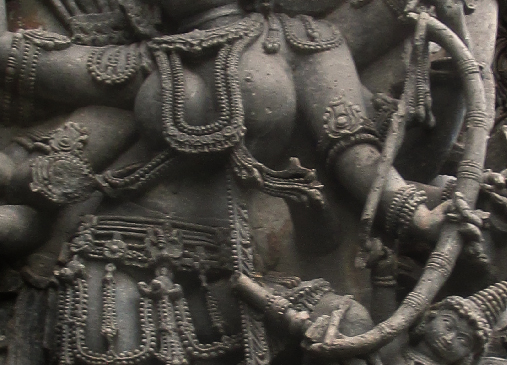
Armed with a conch, disc, trident, bow, arrow, and bell, the ten-armed Durga stands triumphantly with one foot upon the defeated Buffalo Demon, Mahishasur. Durga, the fierce warrior goddess, embodies the ultimate power to vanquish evil and restore cosmic order. Her wrathful energy is a force of divine retribution, annihilating demons and protecting the righteous. Mahishasur, who sought immortality from Brahma, had to settle for a boon that no one could kill him, except a woman.
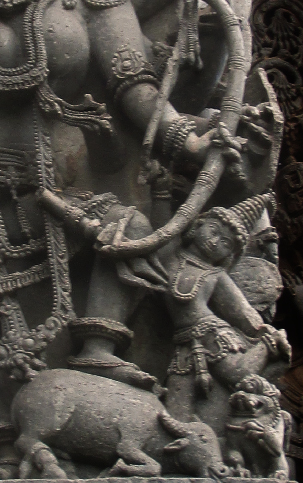
TRIUMPHANT DURGA
Despite the havoc Mahisha unleashed upon the universe, none of the gods could defeat him due to the boon granted by Brahma. It was then that Durga rose to the occasion and slew the demon, embodying the timeless theme of the triumph of good over evil.
earth rescued by वराह
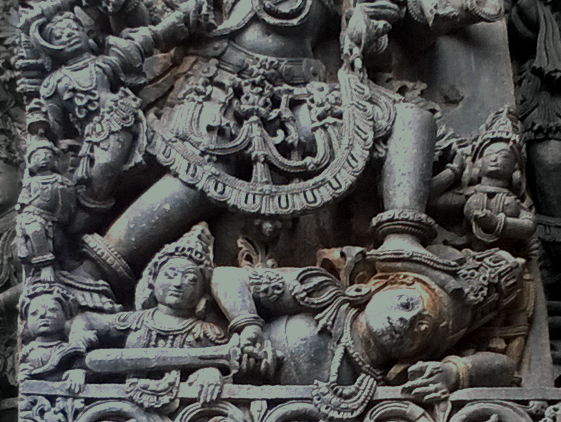
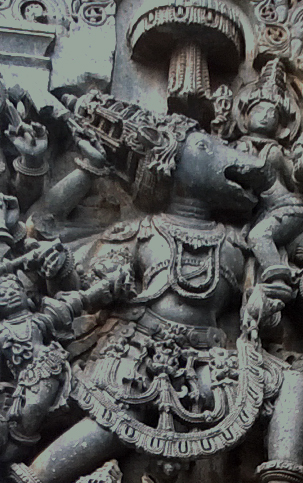
Varaha trampling Hiranyaksh and lifting Bhumi on his shoulder
Hoysaleshwara Temple, Halebidu, Karnataka
Varaha / वराह is a wild-boar who is the third amongst the Dashavataras or Ten Incarnations of Vishnu.
Bhumi / भूमि / Bhudevi / is the earth Godess
Hiranyaksha / हिरण्याक्ष meaning ‘golden-eyed’ was a demon or asura.
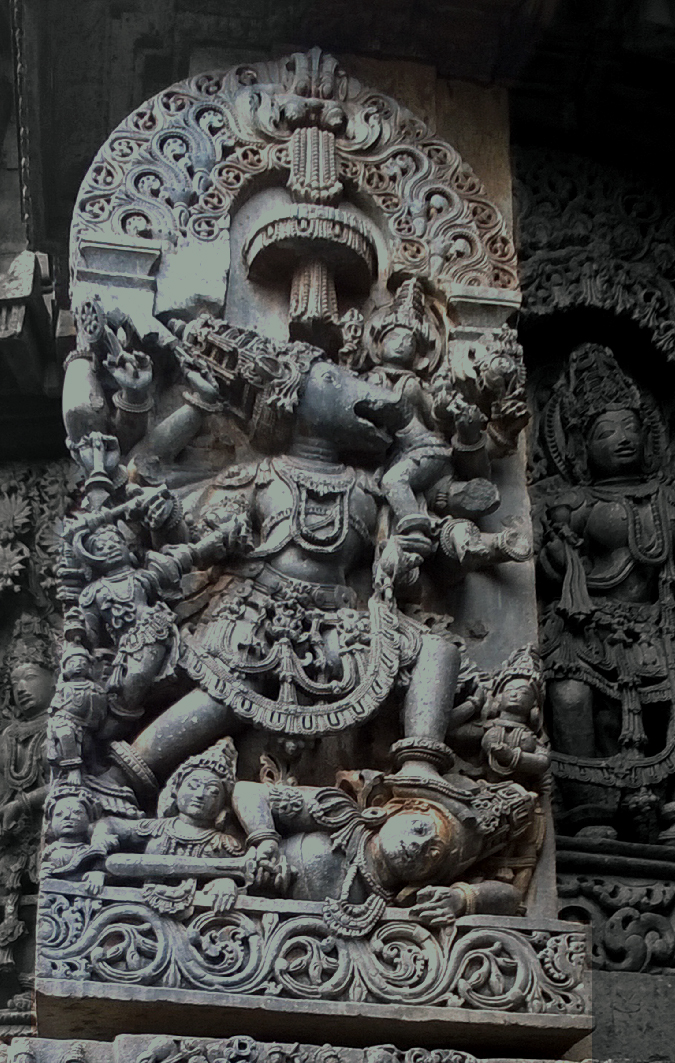
Varaha’s saves Bhudevi
Hiranyaksha received a boon of invulnerability, ensuring he could not be killed by any god, man, or beast. In response, Vishnu manifested as Varaha, the boar incarnation. Varaha, depicted either as a complete boar or in an anthropomorphic form with a boar’s head and human body, trampled the slain demon Hiranyaksha while carrying Bhumi or Bhudevi, the earth goddess, on his shoulder. Hiranyaksha had submerged the earth and terrorized the three worlds.
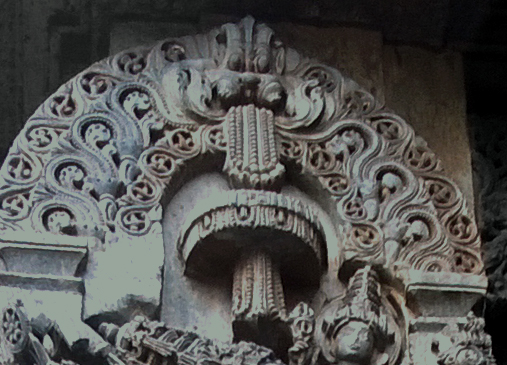
RESTORING THE COSMIC ORDER
Varaha killed Hiranyaksha and retrieved the earth goddess from the cosmic ocean, lifting her on his tusks and securely placing her on his shoulder. He restored Bhumi to her rightful place in the universe, embodying the timeless theme of the triumph of good over evil, righteousness, and the upholding of dharma.
A story of Parijat
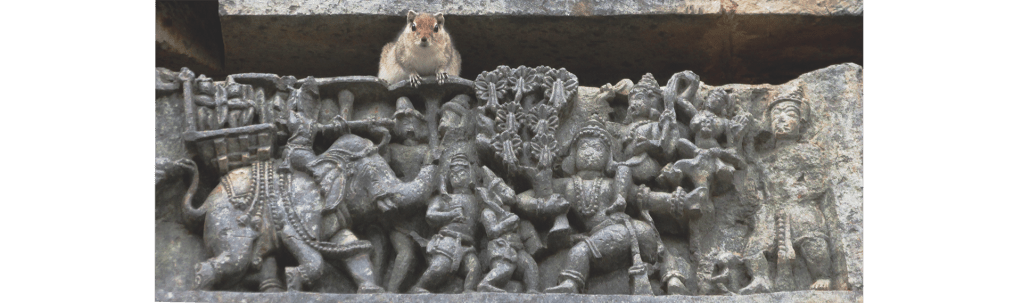
Airavata / ऐरावत is a celestial elephant, characterized by four tusks, and has divine status as he is the principle vehicle of Indra.
The Parijat tree, known for its divine fragrance and beautiful flowers, was a celestial tree in Indra’s garden. When Lord Krishna and Satyabhama decided to bring the Parijat tree to Earth, Indra tried to stop them. He sent his celestial elephant, Airavata, to confront Krishna. However, Krishna, with his divine strength, overcame Airavata and successfully brought the Parijat tree to Earth. This encounter adds drama and excitement to the story, highlighting Krishna’s invincibility and determination to fulfill Satyabhama’s desire.
Parijat / पारिजात is a divine tree, it is also known as night-blooming jasmine, and botanically known as Nyctanthes arbor-tristis.
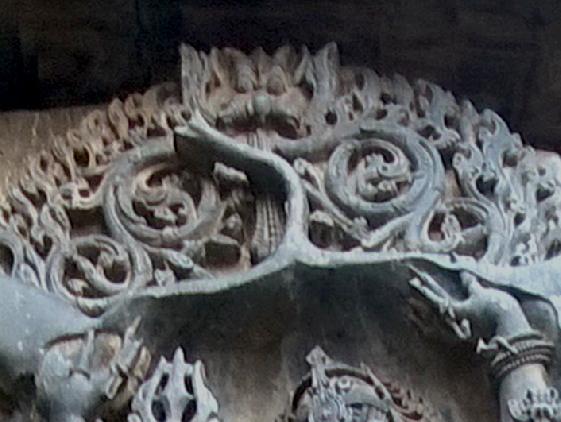
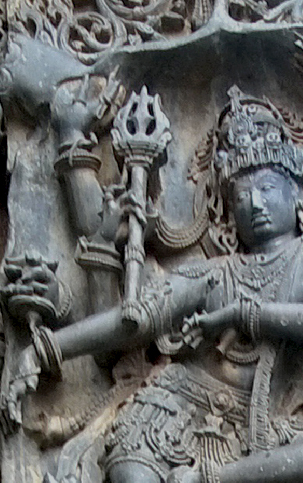
shiva ends गजासुर
Gajasurasamhara
Hoysaleshwara Temple, Halebidu, Karnataka
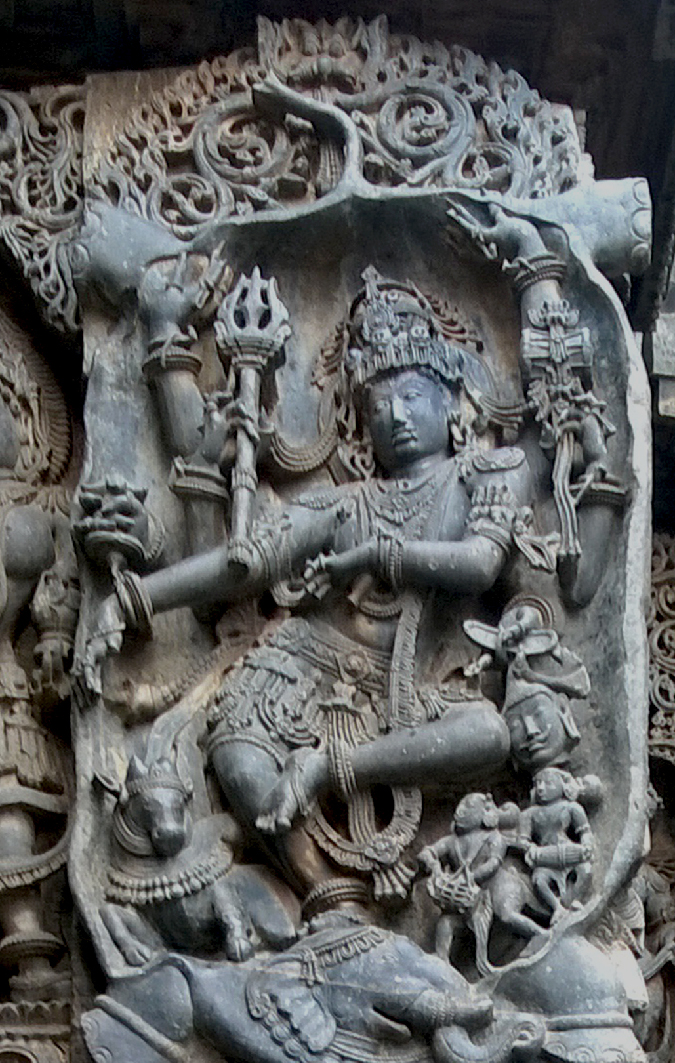
Gajasura / गजासुर is elepant demon; where ‘gaja’ stands for elephant and ‘asur’ stands for demon.
Gajasurasamhara / गजासुरसंहार means the slaying of the elephant demon Gajasura by Lord Shiva, symbolizing the triumph of good over evil and the restoration of cosmic balance..
“You could also see another depiction of the Gajasurvadh at the Deities at Gujari Mahal“
Malevolent Force of gajasura
Gajasur, the elephant demon, was a devoted follower of Brahma. Through his devout penance, he was granted invincibility by a divine boon. This noble beast, once revered as a symbol of good fortune and fortitude, was unleashed upon the world, creating chaos and havoc with his newfound powers. Gajasur used his might to subjugate divine beings and challenge the cosmic order. However, Shiva’s powers were the sole exception to his boon. The world sought refuge in Shiva to end Gajasur’s malice.
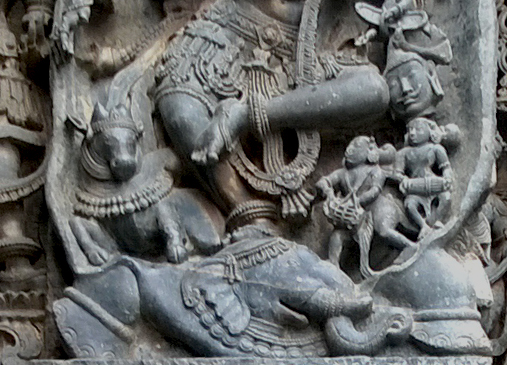
SHIVA’S DANCE OF VICTORY
In Shiva’s sanctuary, Gajasur met his fate. Shiva, triumphing over the malevolent force, slayed the elephant demon, returning the beast to his mortal state. This act restored the cosmic balance, as good prevailed over evil. The essence of heroism, valor, and victory is central to the episode of Gajasura’s demise. With the defeat of the invincible demon, Shiva restored cosmic order. Virtue prevailed over vice, and even the mortal form was cleansed of wickedness, freeing Gajasura from his demonic nature and releasing him into the cosmos.
an umbrella of गोवर्धन पर्वत
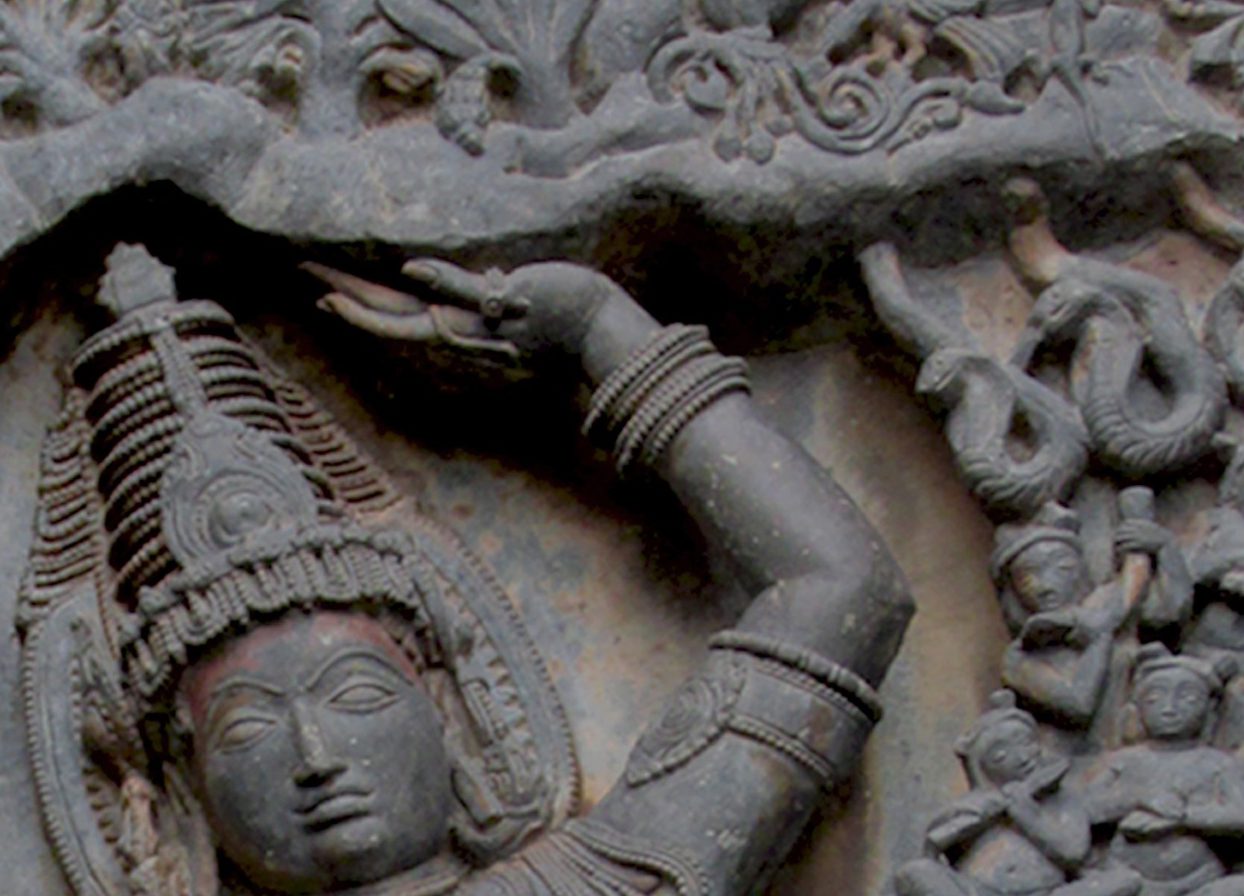
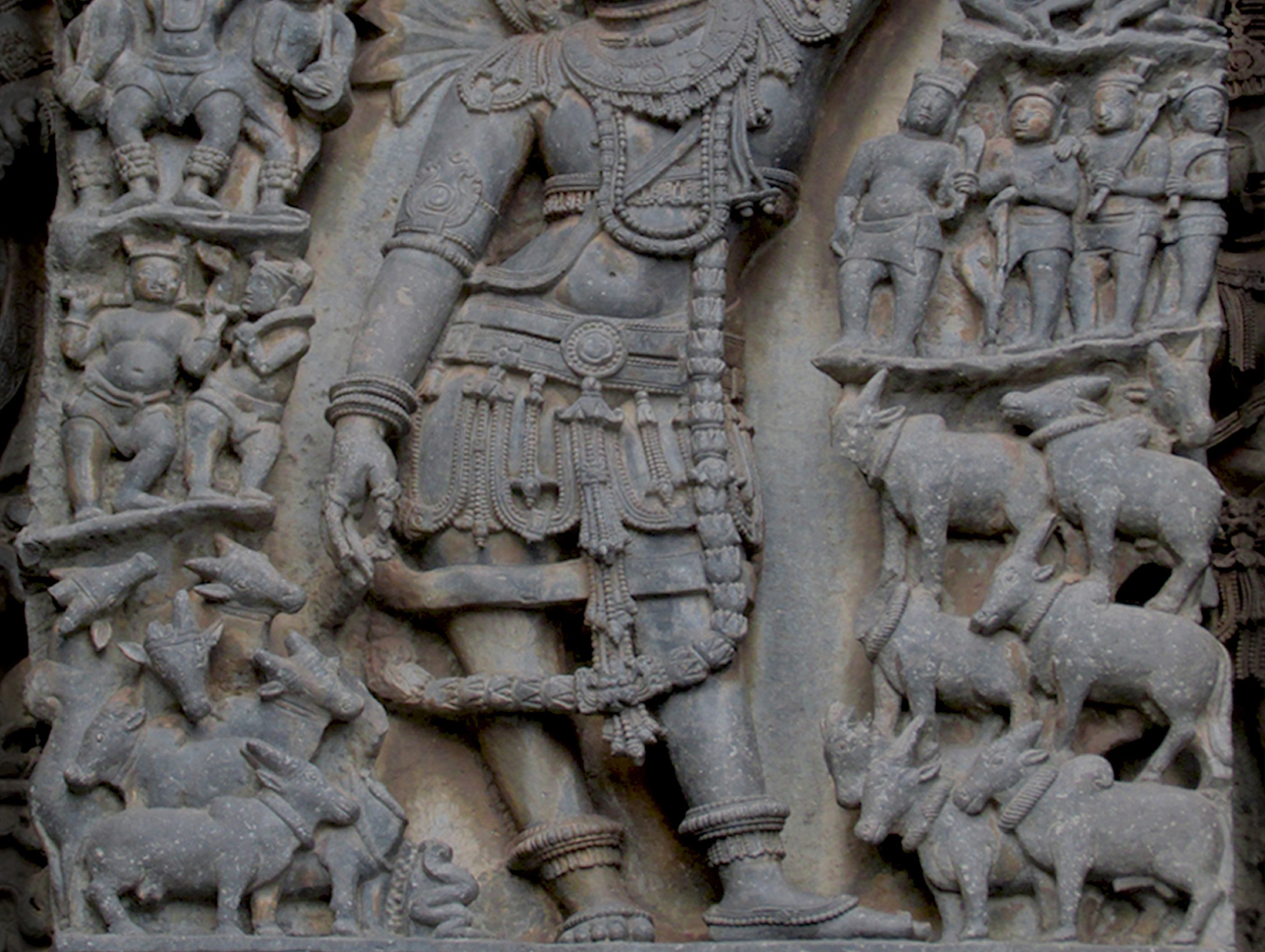
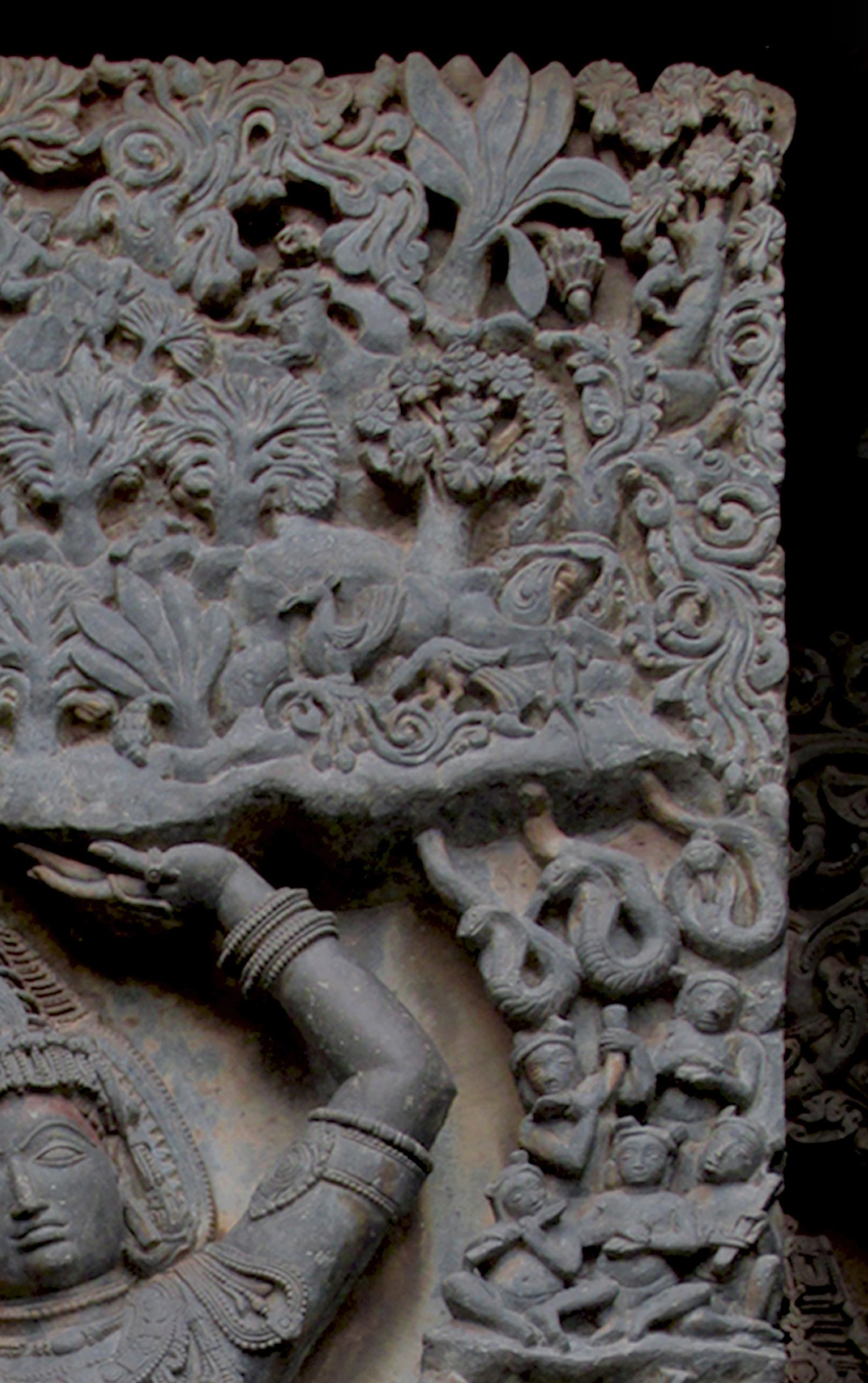
Krishna lifting the Govardhan hill
Hoysaleshwara Temple, Halebidu, Karnataka
Govardhan hill / गोवर्धन पर्वत is the name of a Mountain in Gokul. Go ‘cows’ or ‘senses’ and Vardhan ‘nourishment’ or ‘to increase’. It is associated with the that which increases the senses; Increases devotion to Krishna. Some consider Govardhana means ‘more attraction to Krishna’ or that which increases love and devotion towards Krishna.
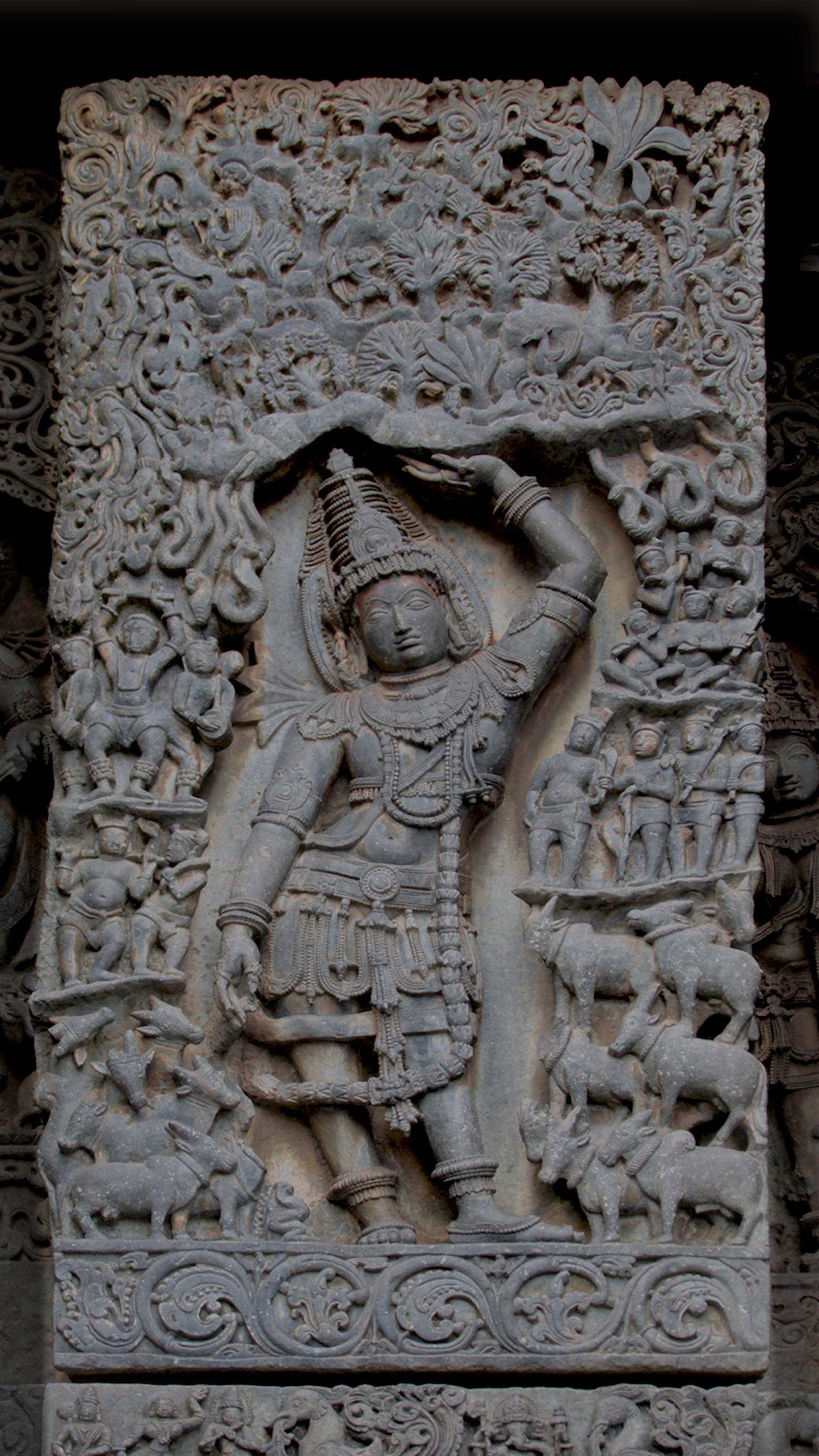
KRISHNA AS GIRIDHAR
Krishna is depicted lifting the Govardhan mountain with a finger of his left hand. Rows of devotees, people, and cows seek refuge under the shade of the mountain. The landscape over the mountain is stylized, featuring snakes and other motifs.
REFUGE FOR ALL BEINGS
The people of Vrindavan were in considerable distress due to the torrential rains and floods caused by Indra. In their time of need, they resorted to Lord Krishna for assistance. Krishna lifted the entire Govardhan mountain on his left little finger, providing shelter to the people of Braj beneath it for seven days. This act of Krishna not only protected the inhabitants from the wrath of Indra but also demonstrated his divine power and compassion.
Rejoicing the Cosmic Order
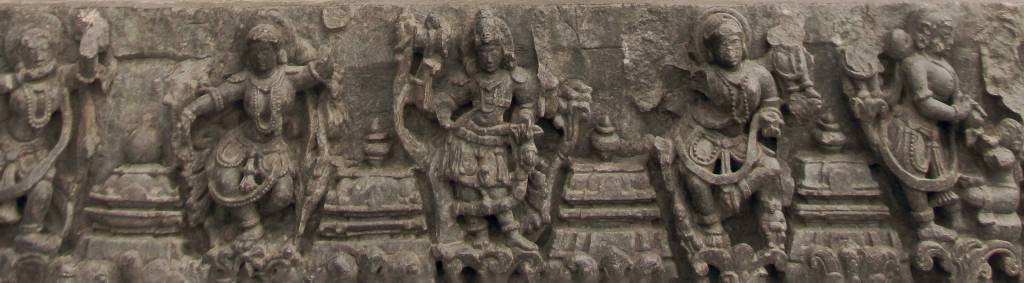
Temple shikharas rising above the line of clouds and dancers performing above them. [a section from a relief at the base of the Uma Maheshwara depiction (seen above) from the Hoysaleshwara Temple Complex at Halebidu]
Dancing Deities

Temple shikharas rising above the line of clouds and dancers performing above them. [a section from a relief at the base of the Uma Maheshwara depiction (seen above) from the Hoysaleshwara Temple Complex at Halebidu]
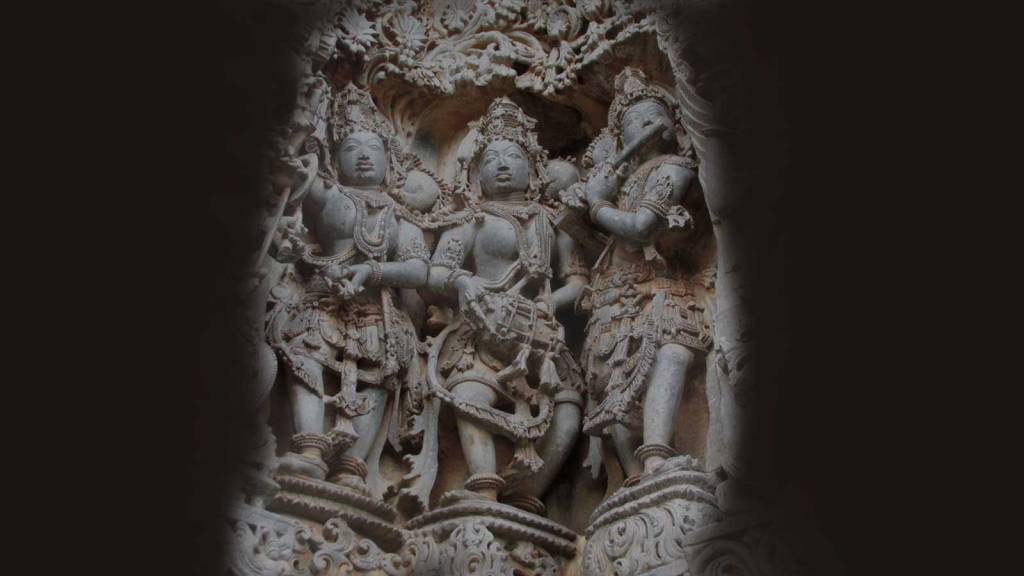
Divine Narratives in Stone
The divine feats, cosmic dance, and graceful performances of celestial beings depicted in these stone narratives capture the essence of heroism, devotion, and the eternal struggle between good and evil. Hoysala art has gifted us with exquisitely crafted sculptures that embody profound symbolism and timeless beauty. They are a reminder of the enduring power of art to convey deep spiritual and cultural themes, leaving a lasting legacy.
[More from Hoysala Artistry]
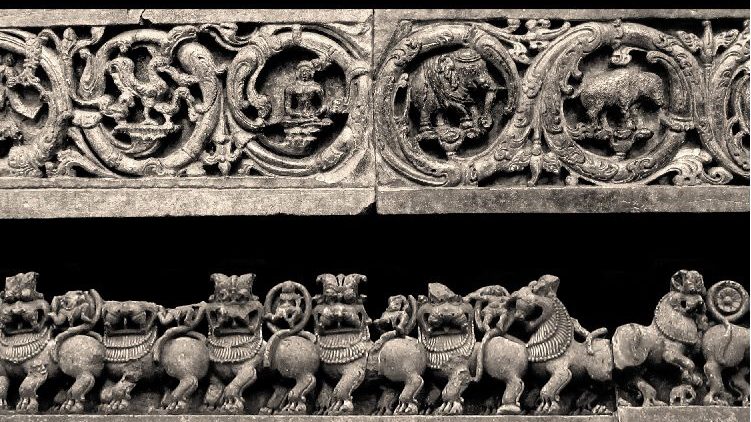
This blog is a sequel to Hoysala Treasures in South India.
The Hoysala Dynasty ruled medieval Karnataka, leaving a rich legacy of art, architecture, and temples. Two key sites are Belur and Halebidu.




 प्रा
प्रा 