Art Deco, was born in Paris during the 1920s at the ‘Exposition Internationale des Arts Décoratifs et Industriels Modernes’. It made its entry into India through the bustling shores of Bombay in the 1930s. This design movement brought a fresh departure from the colonial architecture that had dominated the city.
The first glimpses of Art Deco in Bombay appeared around the newly reclaimed areas near Oval Maidan and along Marine Drive’s Queen’s Necklace. From there, it spread, leaving its mark on the ever-expanding cityscape. Neighbourhoods like Dadar, Sion, Worli, and Matunga soon saw a rise in buildings adorned with these distinctive Art Deco features.
This page documents some of the beautiful Art Deco elements found in Dadar’s Shivaji Park neighbourhood.

ART DECO
Historically, Art Deco emerged from the design movements of the early 20th century and evolved into a significant cultural movement. It was not just confined to architecture or interior design; it extended to decorative objects, everyday items, jewellery, automobiles, and even electronics. Stylistically, Art Deco is characterized by geometric patterns, stepped forms, nautical themes, figurative ornamentation, symbolic elements, distinctive typography, and sleek, streamlined designs.

SHIVAJI PARK
Coinciding with the birth of Art Deco in Paris, Shivaji Park opened to the public in 1925 here in Bombay. Ever since, it has remained a central hub for the community around the Mahim-Dadar areas. Unlike most parks, Shivaji Park stands out with its lack of barricaded railings. Its iconic katta (the low boundary wall) invites a vibrant array of activities day and night.
Around this encircling katta, low-rise buildings (two to three stories) in the Art Deco style flourished. However, these buildings are constantly being redeveloped and replaced by taller structures. The skyline, that once had buildings shaded under old trees, is changing each day. The old charm of yesteryears is slowly fading, as it is being replaced by high-rise buildings towering above the natural cover.
SHIVAJI PARK’S ART DECO

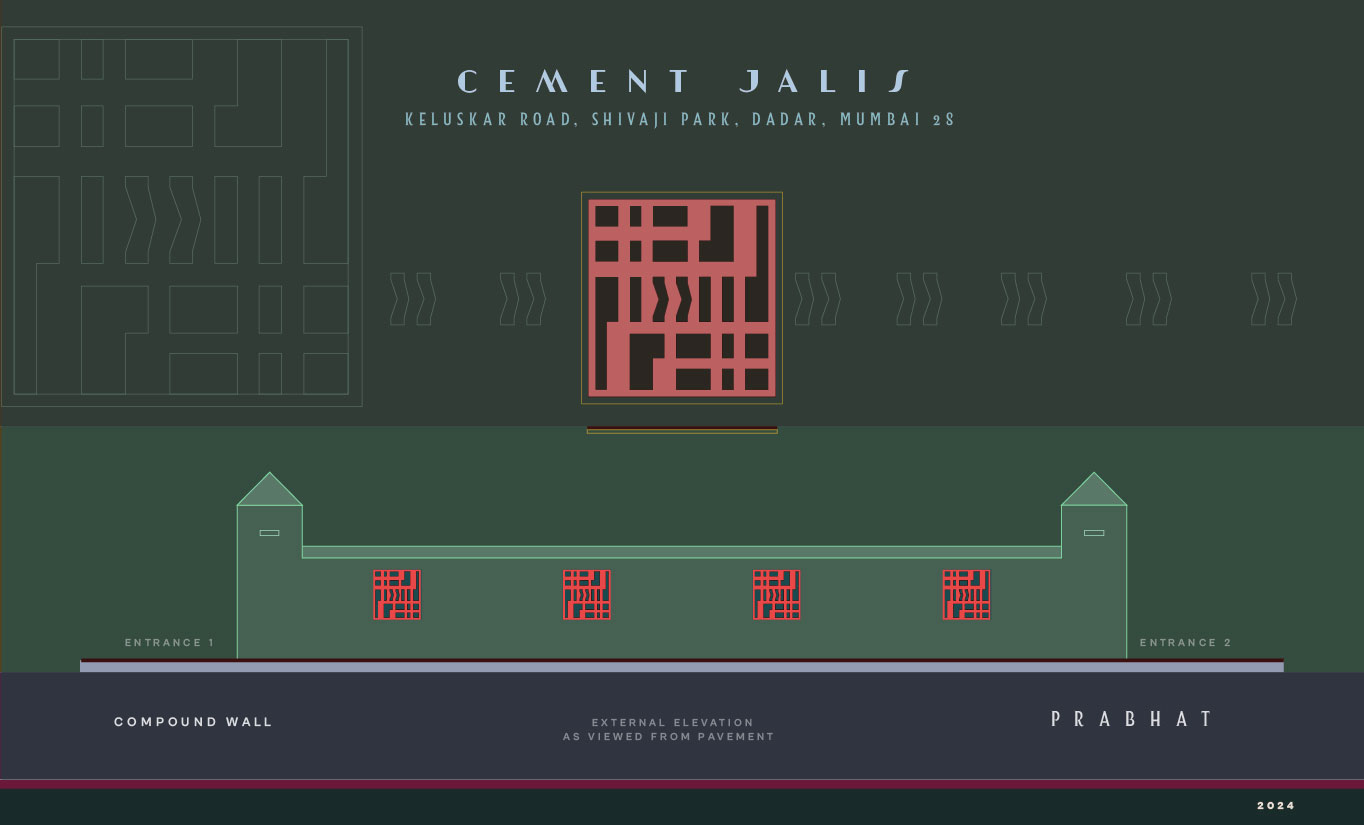
With only a few surviving old Art Deco buildings in Shivaji Park, this is an attempt to record some of its characteristic feature. These buildings exude a homely vibe, with almost all of them being under four storeys and featuring small yards. They are separated from each other and from the pedestrian pavement by low compound walls, which mark the property boundaries. These walls often have decorative metal railings or are punctured by cement jalis, providing both privacy and ventilation to the ground-level homes.
Cement jalis, an innovation of the time, were factory-made in moulds, allowing for large-scale production. These compound walls also create semi-private spaces that can be shared by the building’s occupants. Almost all these buildings boast spacious balconies, some of which project outward from the structure and others that wrap around corners. Some balconies resemble ship decks, a typical Art Deco feature inspired by the design of steamships and large sea vessels.
These verandas and balconies are further embellished with metal grilles and cement jalis, showcasing a wide range of patterns and motifs typical of the Art Deco style. Similar features can be found on the metal grilles fitted to the windows of individual homes and the stairwells of the buildings.
Art Deco characteristics are evident in the external facades and overall form modulation of the buildings. This includes pronounced horizontal and vertical banding, geometric forms, stepped profiles, streamlined shapes, wall cladding, and the overall massing of the structures. Striking features such as strips, speedy lines, rising bands, curved balconies, semi-open and covered spaces for ventilation, and projecting eyebrows over balconies to provide shade from rain, sunlight, and wind are all hallmarks of Art Deco.

STYLISTIC ELEMENTS
Shivaji Park’s Art Deco showcases a rich variety of stylistic elements such as frozen fountains, sunbursts, sea waves, tropical and nautical imagery, bands, chevrons, strips, zigzags, oblong squares, spirals, sweeping arching lines, speedy lines, and stepped formations.
Note on the Documentation: The drawings presented below are made proportionally and are not measured drawings nor are they to scale. The intent behind creating these illustrations is to provide a sense of the artistic and stylistic heritage of the Art Deco movement as observed in the buildings of Shivaji Park. A few bulding names are taken as they currently appear on google maps, so as to make it easier for them to be traced.
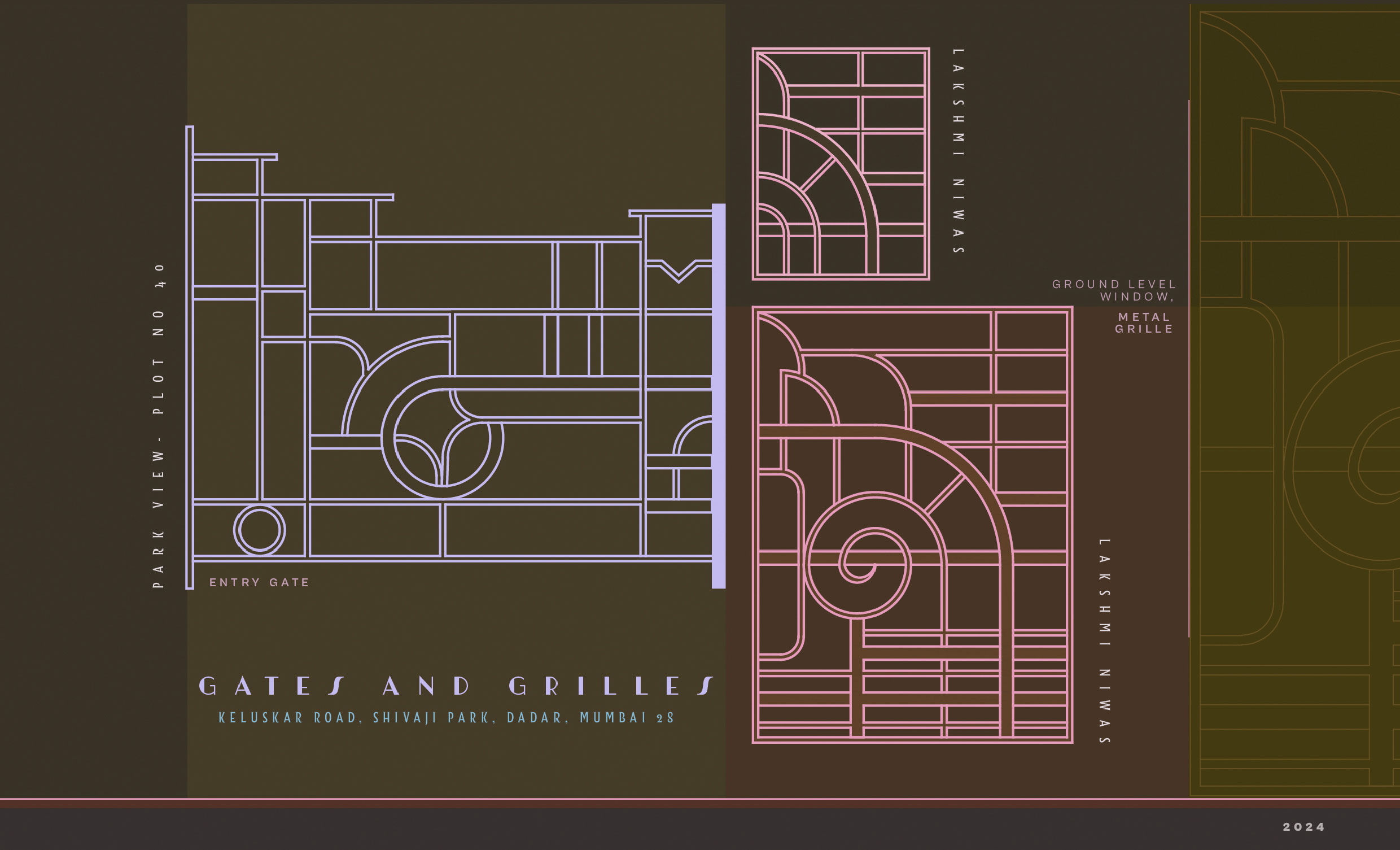
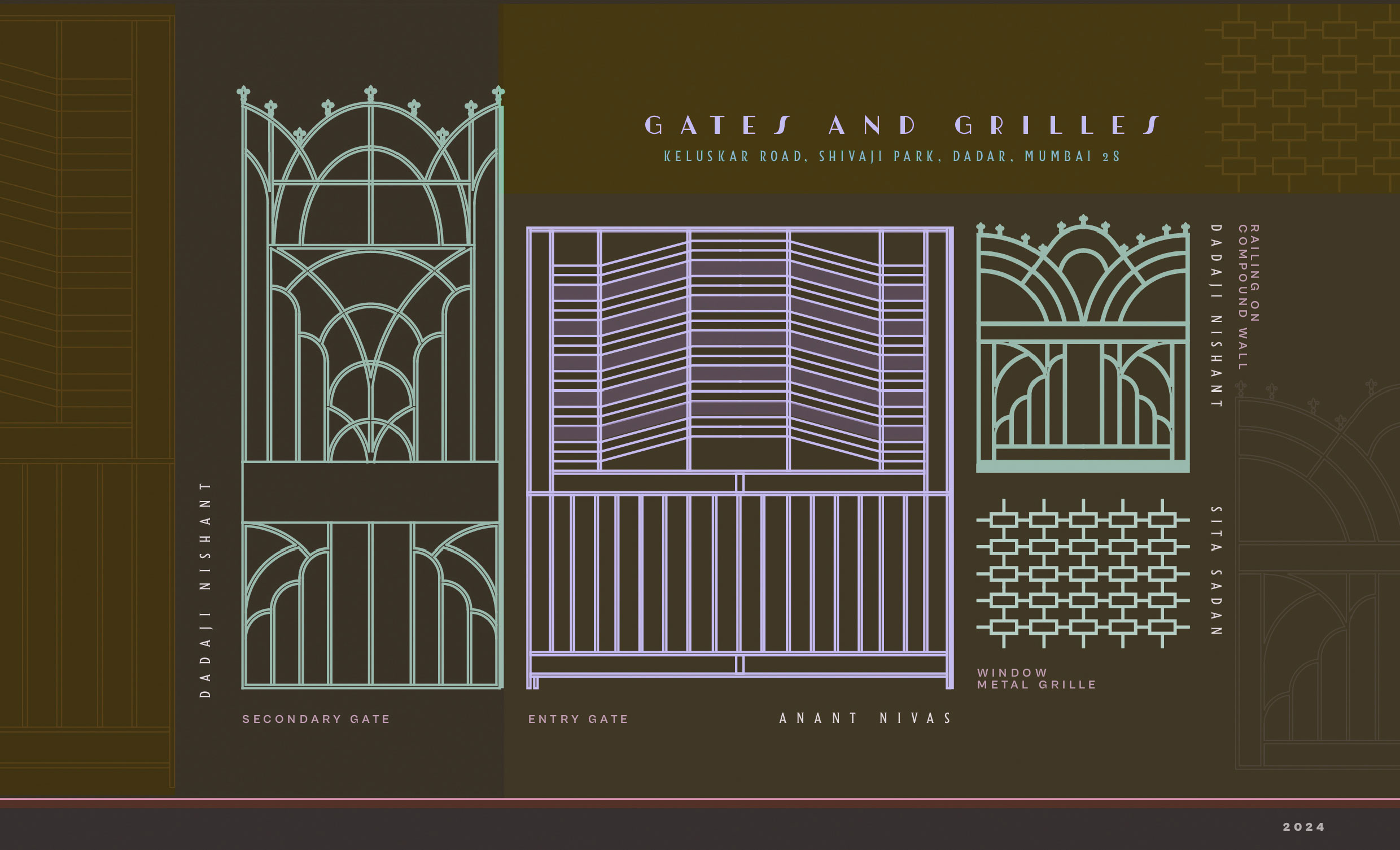
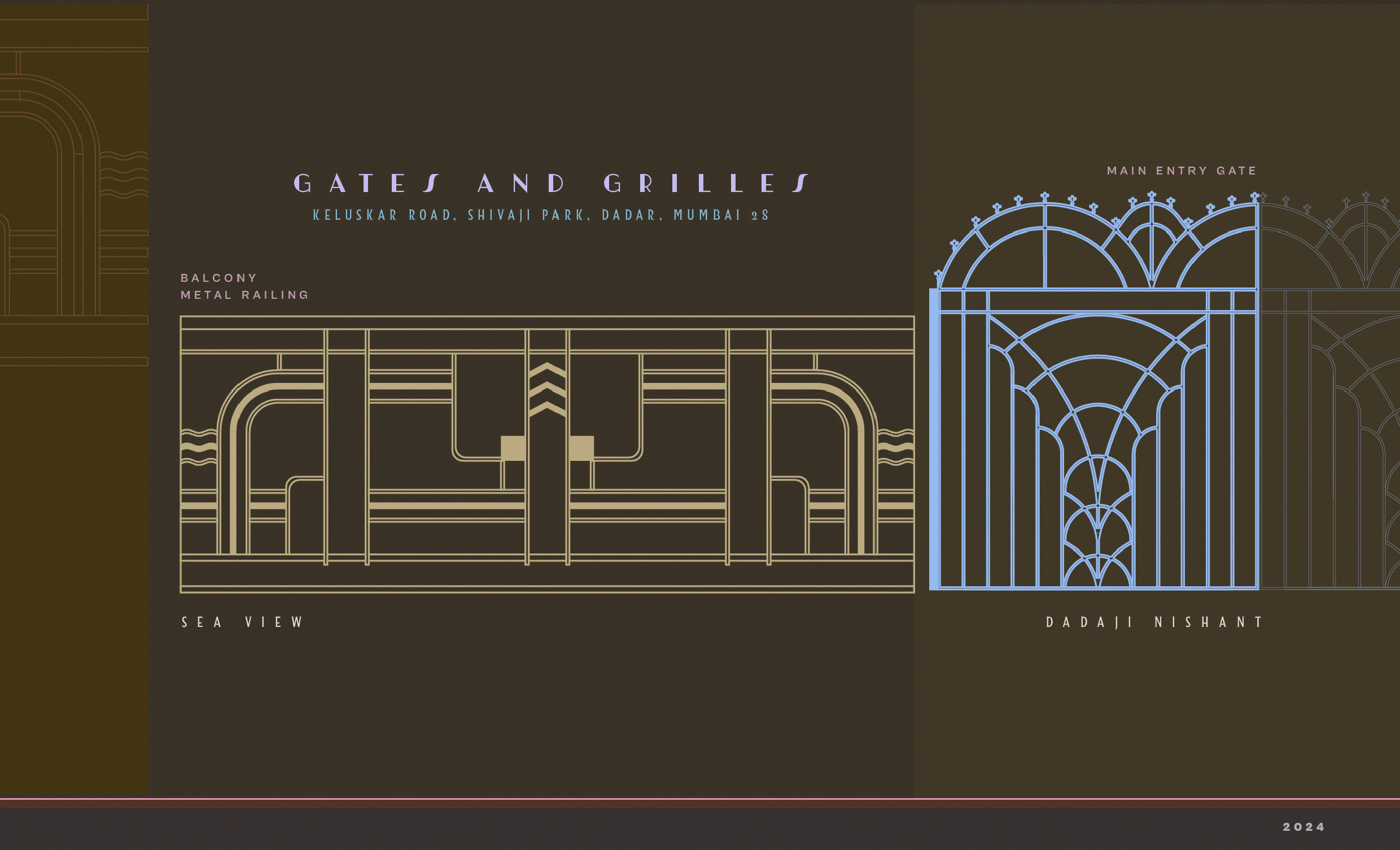
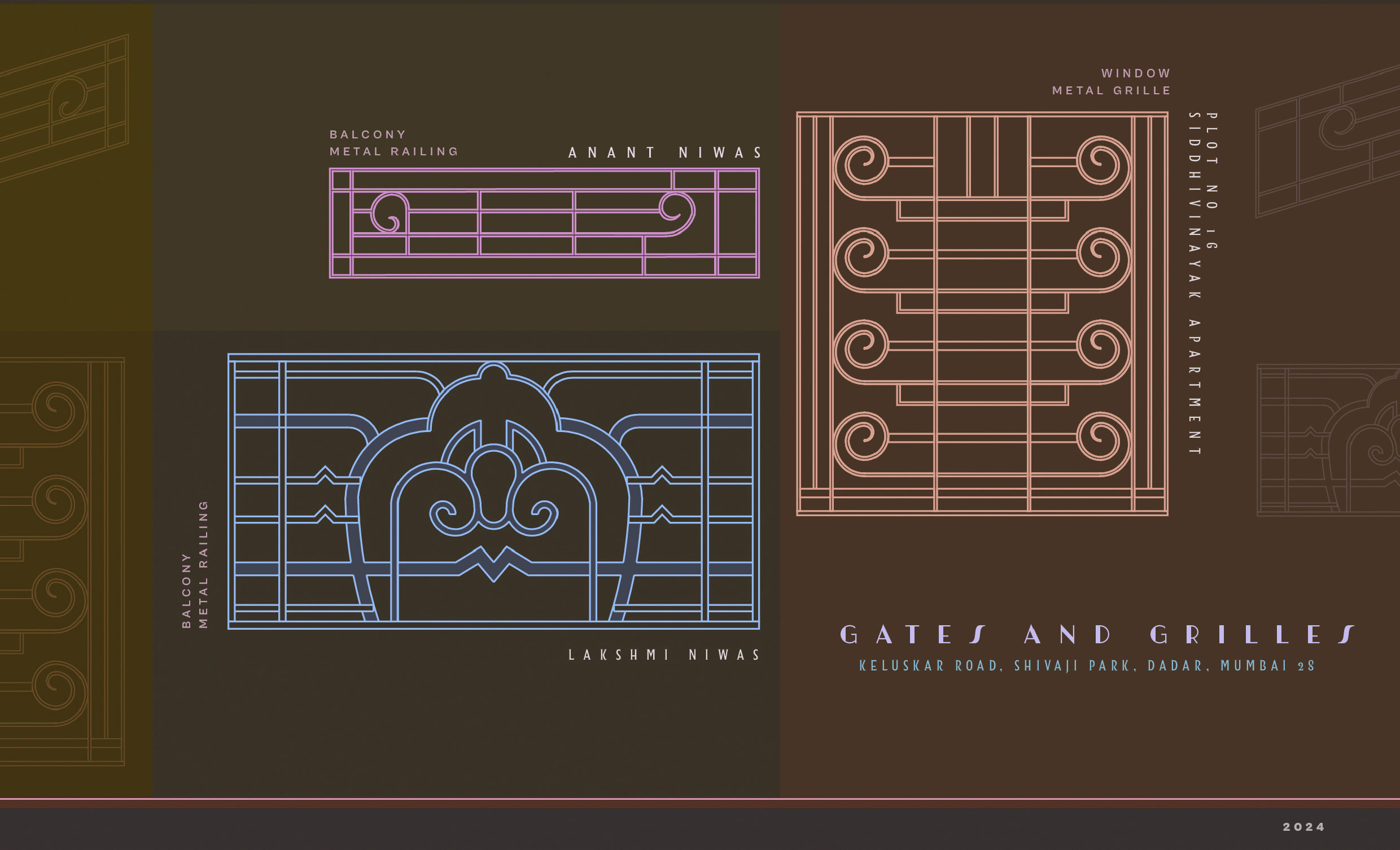
Part 1 : Gates and Grilles
This initial collection documents the ‘Gates and Grilles’ featuring Art Deco characteristics. These gates and grilles are more than just functional—they are artistic expressions. The use of metalwork showcases skilled craftsmanship, blending both decorative and practical purposes. These features not only define boundaries but also enhance the visual appeal of the property, making them integral components of the Art Deco charm in Shivaji Park.

Reinforced Cement Concrete
The induction of Reinforced Cement Concrete revolutionized the building process, significantly speeding up construction at the time. This innovative material was not only cost-effective but also enabled unique structural designs during the Art Deco period, which were previously unattainable with traditional building materials.
Part 2 : Cement Jalis
Continuing from the earlier explanation, factory-made cement jalis were a notable innovation of the era. These jalis were both functional and decorative, enhancing the aesthetics of structures. Indian architecture has long incorporated the use of jali and lattice work, particularly in stone and wood. While these traditional jalis were intricate and beautiful, they were also labour-intensive and expensive.
Cement jalis are created by pouring cement into moulds of the desired design and size, followed by curing and demoulding once hardened. They are then polished or painted, and sometimes pigments are added directly into the cement mixture. The ability to mass-produce these jalis led to their widespread use across the city.
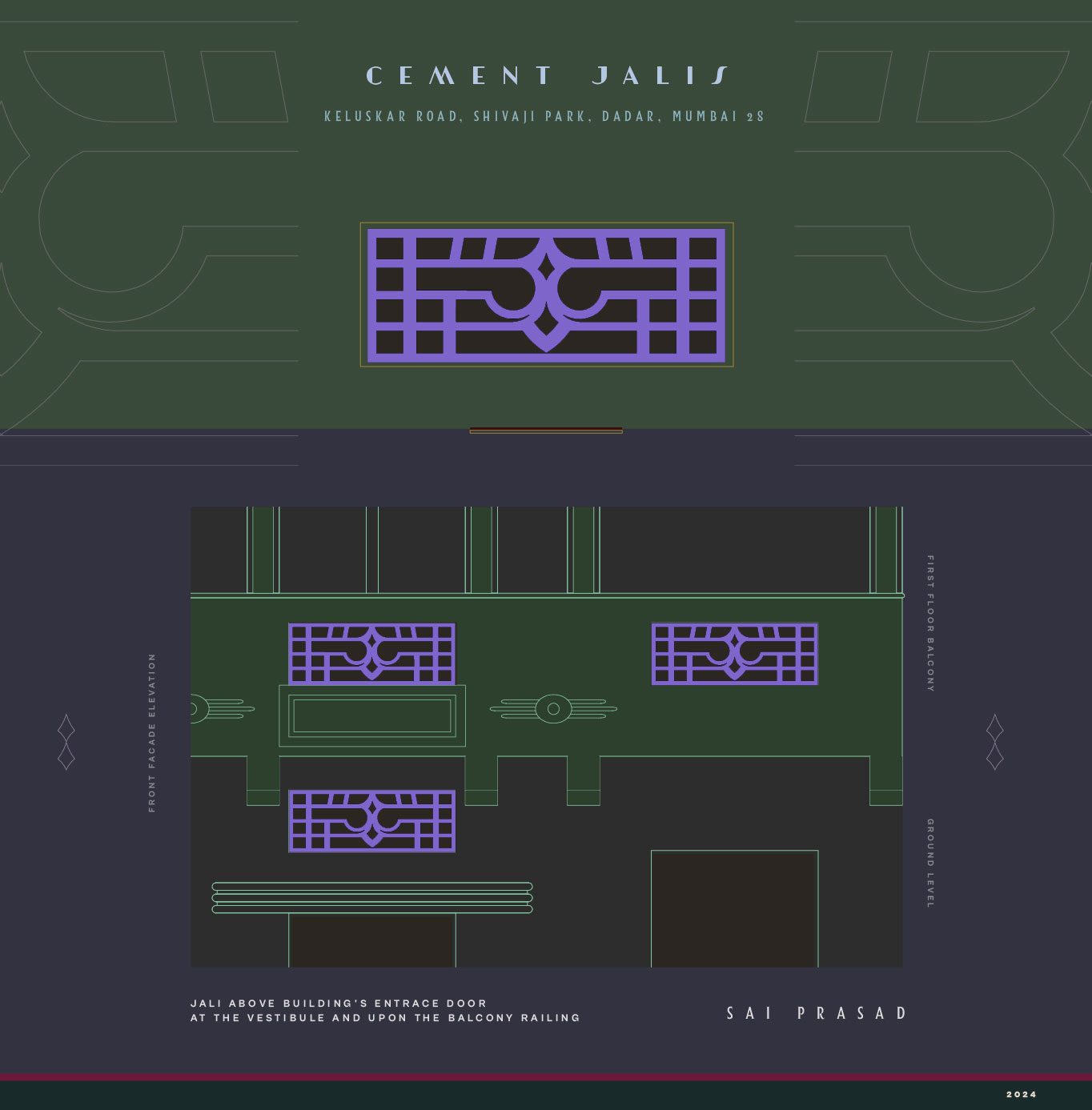
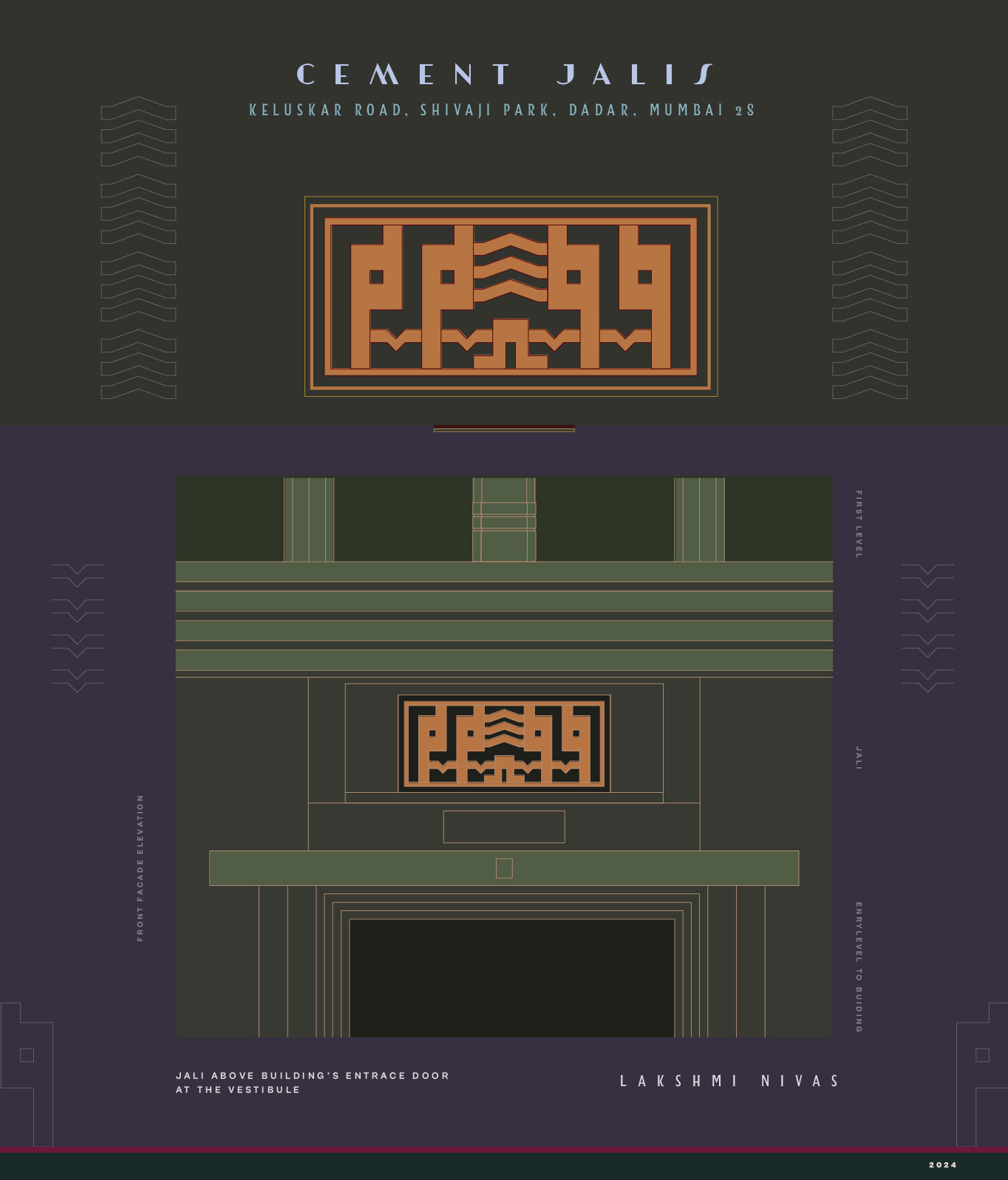
Shivaji Park’s buildings feature some beautiful cement jalis in the Art Deco style. These jalis showcase geometric patterns, abstract motifs, zigzags, grids, and sweeping arches, aligning with the patterns seen in the grilles and gates. Some of these Art Deco jalis are found even in buildings that are not strictly Art Deco.
Cement jalis not only add a decorative touch but also provide excellent ventilation to the interiors. They are commonly found on compound walls, building vestibules, and as insets in balcony railings.

Part 3 : Balconies (and Eyebrows)
The term ‘balcony’ is familiar to most, but ‘eyebrows’ in architectural design is a less-known concept. While balconies are those semi-open, covered spaces that extend into the world, offering glimpses of the city (here, park views), eyebrows are horizontal surfaces that project outward over balconies (and sometimes windows) to provide much-needed shade from the elements.
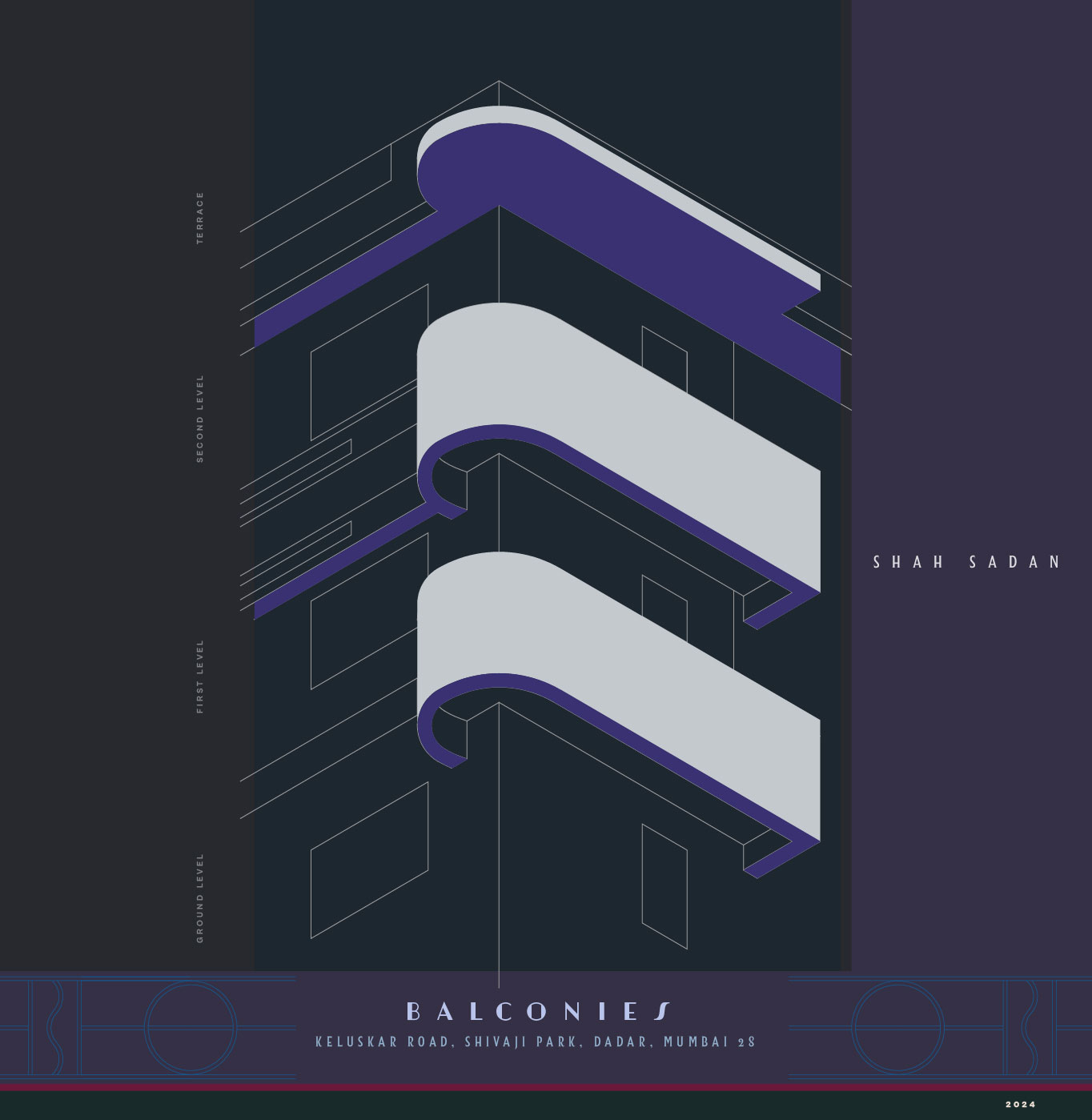
The art deco buildings around the park boast balconies with picturesque views of the brown soil, white-clad cricket players, and the daily ebb and flow of locals and visitors, all framed by thick tree foliage. These balconies often evoke the feeling of treehouse balconies, surrounded by the bounty of nature.
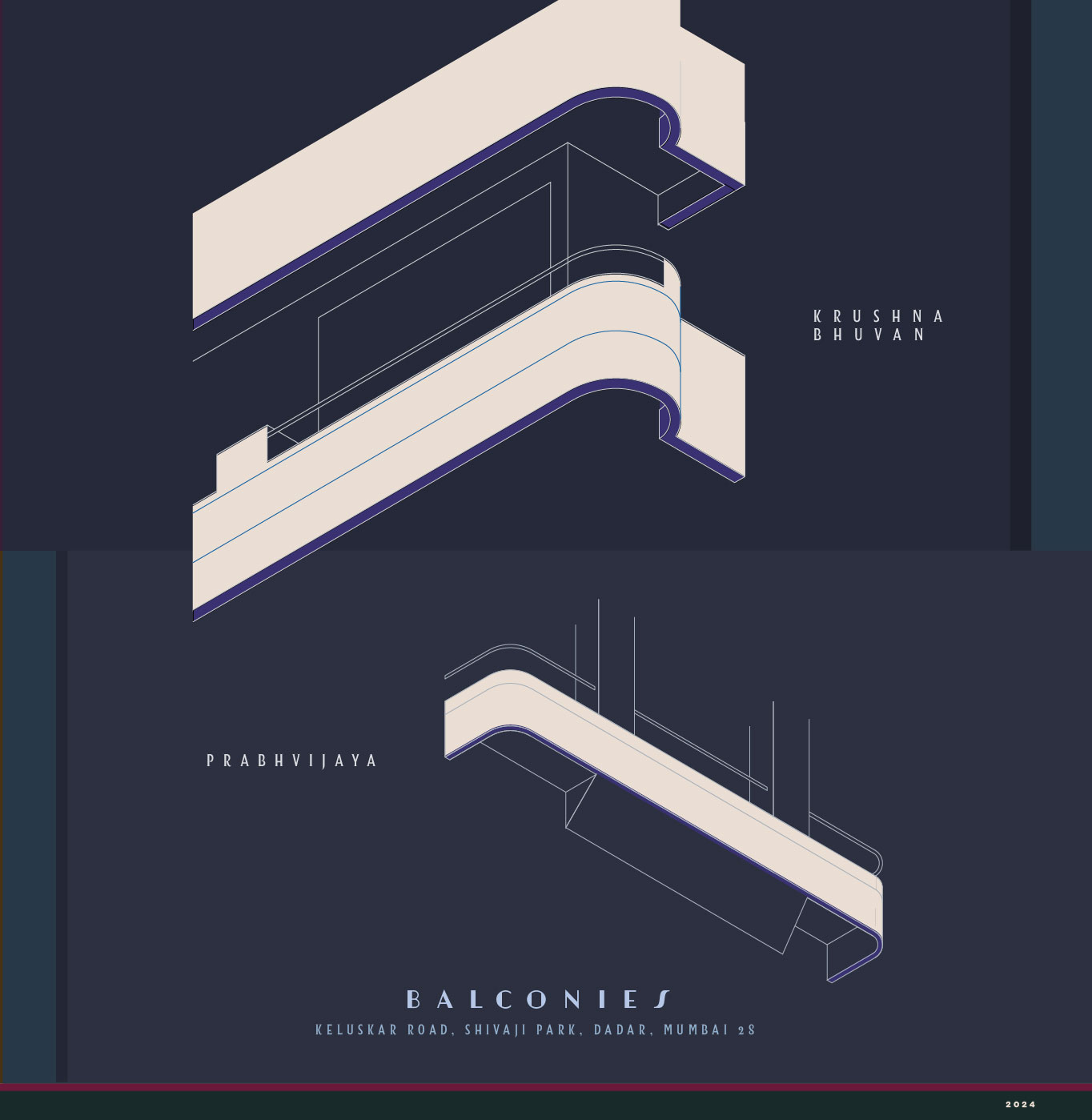

Many art deco balconies draw inspiration from ship decks, projecting expansively from the building facade. These balconies often wrap around the corners of buildings, creating tiered roofs for the levels below, with the topmost balcony shielded by a large surface (eyebrows). The corner balconies come in two styles: rectilinear and cylindrical, the latter wrapping around the building’s edge like large streamlined bands.
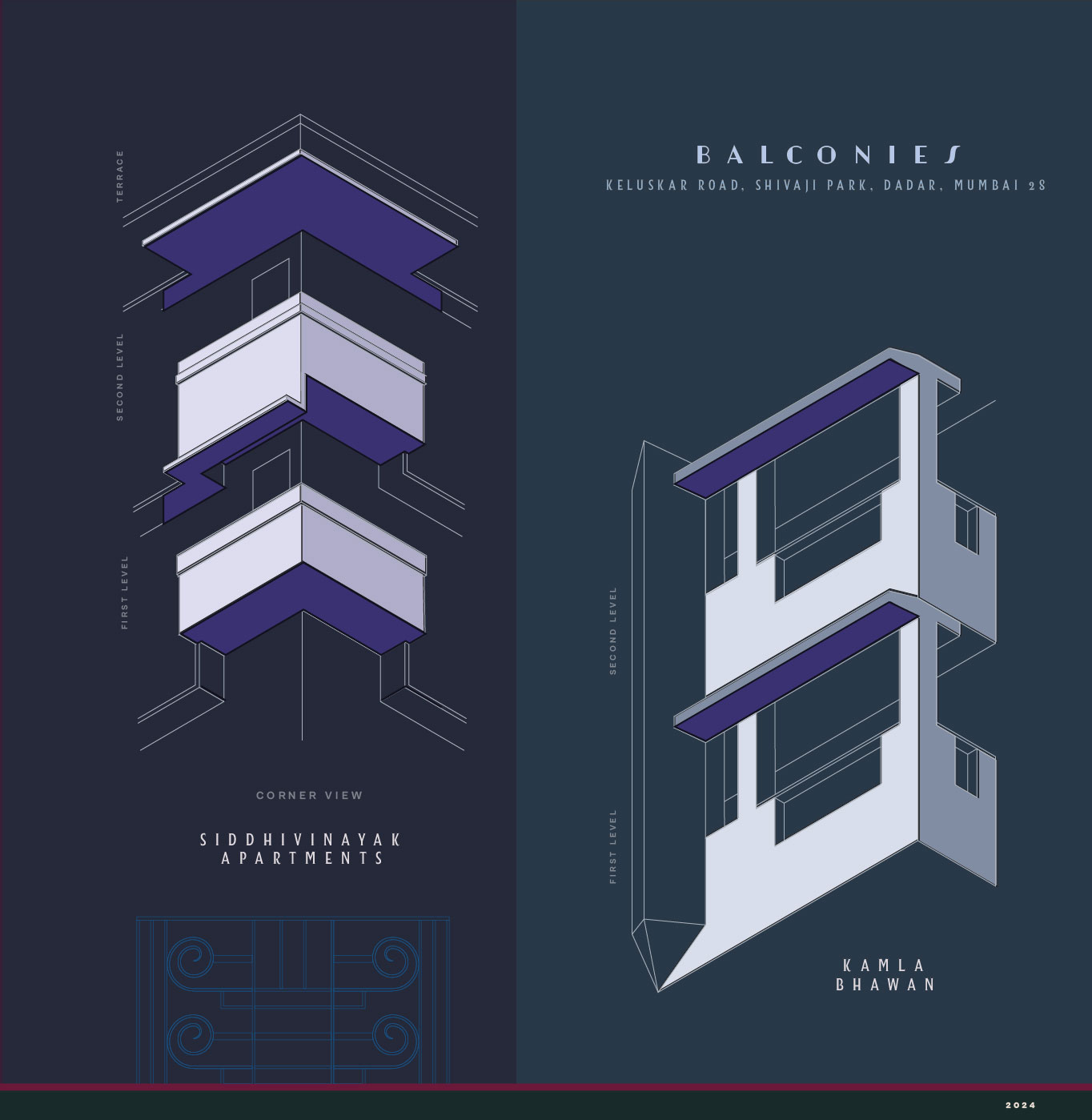
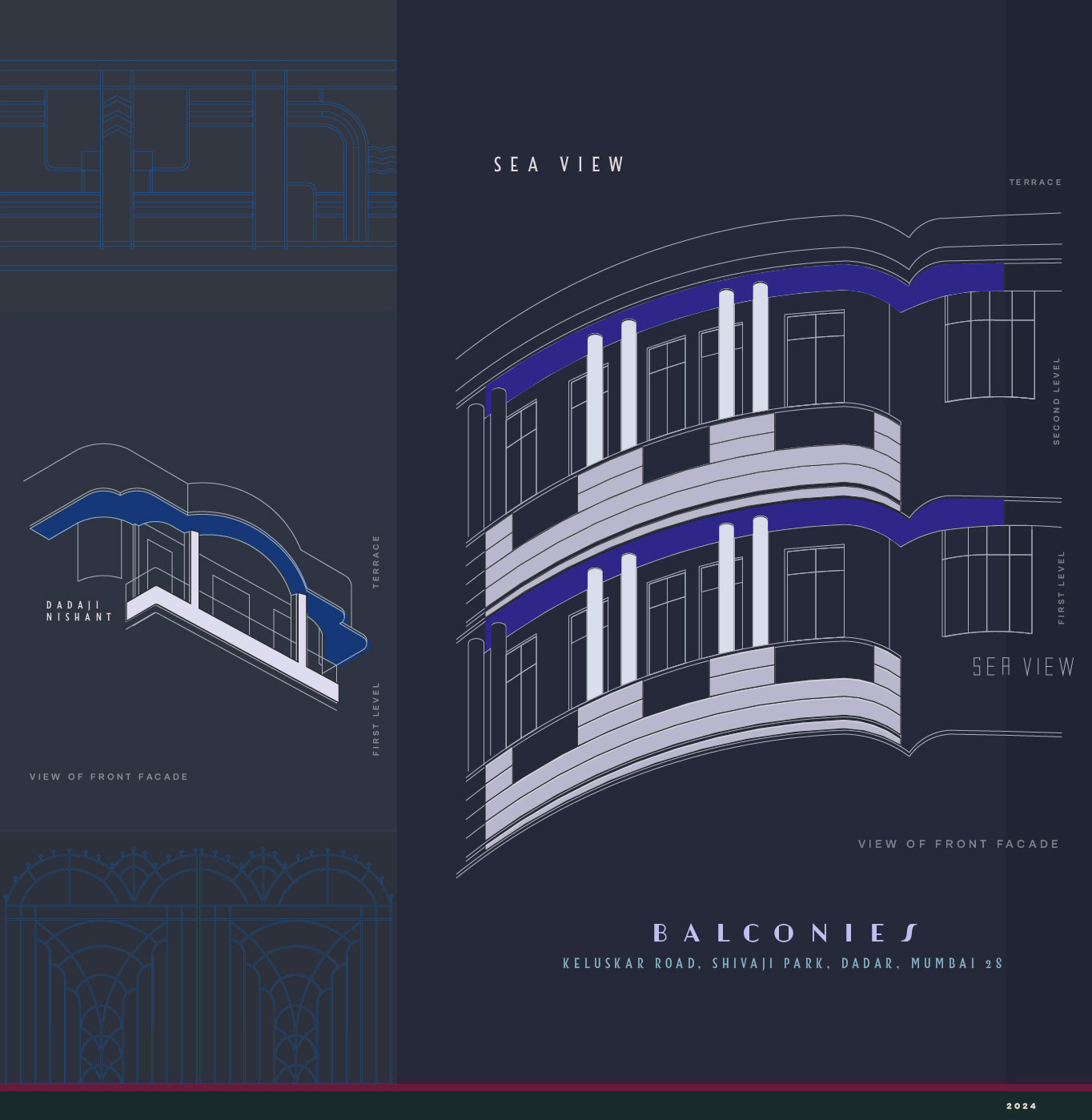
Some balconies form horizontal bands that curve outward before blending back into the building. The eyebrows of these balconies often run along the building’s outer profile, supported by groups of columns.
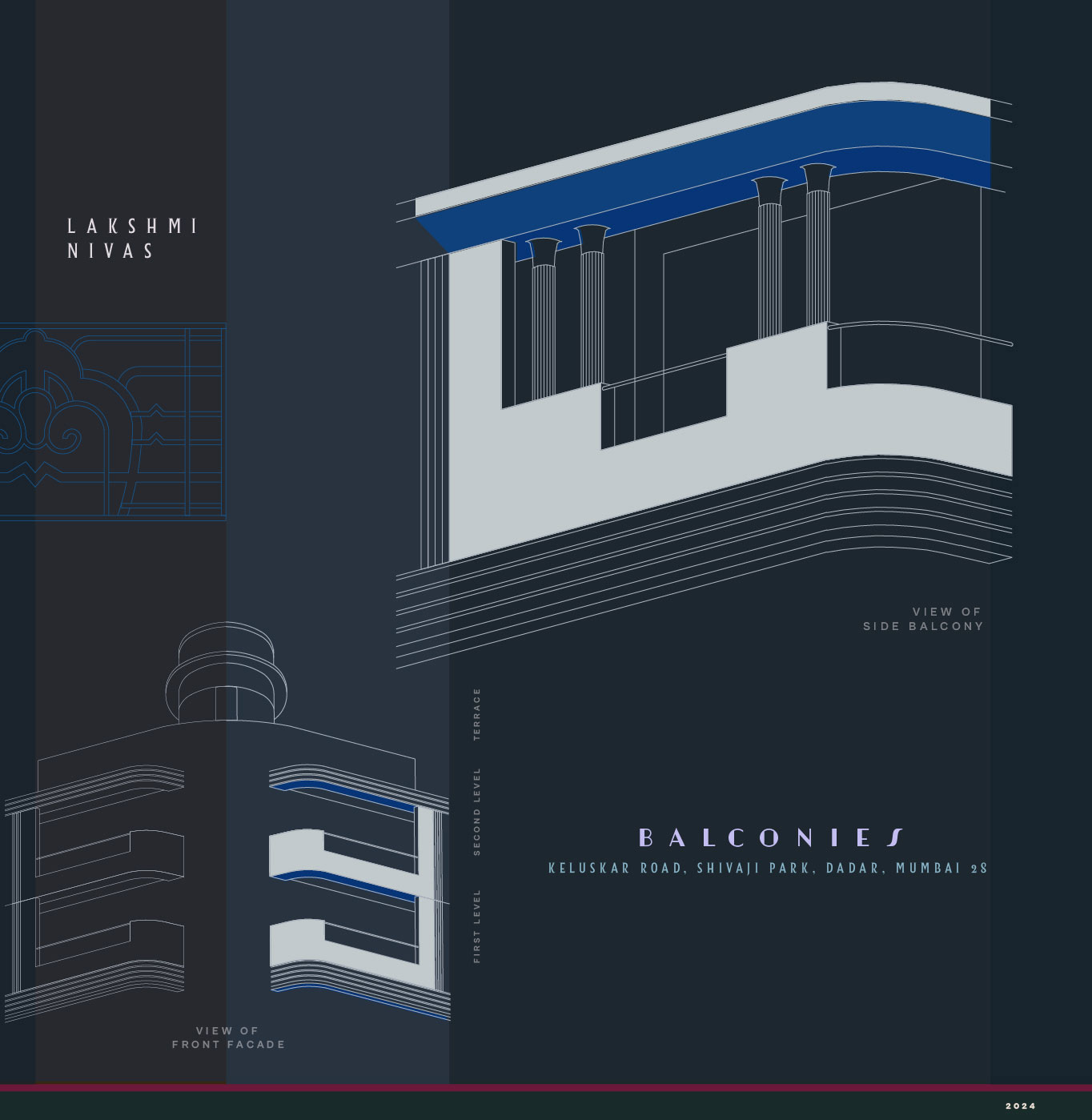
Balconies in art deco buildings add unique contours and an extra edge to the design. These solid, streamlined horizontal bands are punctuated by metal grilles and railings, adding to their charm.
In newer urban structures, such balconies are rare. Modern life often leaves little time for the quieter pleasures, like sipping a cuppa or for some gappa, or for reading a book or the daily paper, or simply watching the day unfold from these spacious extensions to one’s homes.
Theser is so much in this beutiful neighbourhood, but so much for now.
This is a little tribute…to the Deco of the Park
A stroll through the periphery of Shivaji Park reminds us of how the Art Deco movement has shaped this vibrant neighbourhood. The stylistic elements and architectural nuances of the 1930s continue to tell tales of an era when Bombay and its people began to modernize. Local architects and designers created designs that blended elegance and functionality, keeping pace with global trends.
These buildings, with their unique balconies, eyebrows, gates, and grilles, whisper tales of the city’s rich architectural legacy.
Fast-paced urbanization often erases landmarks of local-history and cherished treasures of the past. This small attempt aims to archive and celebrate the Charms of the Park.




 प्रा
प्रा 